Reconnecting the past: how the landowner of Racecourse Farm is restoring his grandfather’s woodland
Landowner restores woodland through the England Woodland Creation Offer (EWCO), planting 23,015 native trees to reconnect fragmented habitats and offset carbon.
RacecourseÌýFarm takes its name from the horse racing track thatÌýoperatedÌýon the site in the early 1900s.ÌýWhen Jonathan Capener inheritedÌýtheÌý196-hectareÌýfarmÌýfrom his fatherÌýin 2023, he saw an opportunity to heal aÌýfragmented landscape.ÌýÌý
His project, supported by EWCO,Ìýhas seen 23,015 native trees including oak, field maple, hazel and Scots pine planted across 12.26 hectares.
Key facts
- site:ÌýRacecourse Farm, Newcastle-under-Lyme, StaffordshireÌý
- size: 196-hectare farm, with planting acrossÌý12.26 hectares
- type:Ìýnative broadleaf and coniferÌý
- species mix:Ìýoak, field maple,ÌýhazelÌýandÌýscotsÌýpineÌý
- date planted:Ìý2024Ìý
- grant: EWCOÌý
Objective
Enhance biodiversity, restore historic woodlandÌýareasÌýand improve habitats. The scheme also aims to offset carbon for the landowner’sÌýotherÌýbusiness.
Restoring and reconnecting fragmented woodlandsÌý
In recent decades,ÌýRacecourse Farm has beenÌýmanaged primarily for shooting, with woodlands being fragmented to create better sightÌýlines andÌýimprovedÌýshooting opportunities. This heritage shapedÌýthe farmÌýas Jonathan knows it.ÌýÌý
His vision centres on transforming these scattered woodland patches back into a well-managed forest ecosystem. The projectÌýfocuses on restoringÌýBentileeÌýWood toÌýitsÌýhistoric boundaries, alongside replantingÌýOxhayÌýwood – a 6.7ha area that was felled in the 1940s but never replanted. By reconnectingÌýthese woodland fragments, the project isÌýrestoringÌýthe landscape.Ìý

View of newly planted trees that link up with neighbouring areas of established woods. Copyright: Robinson Forestry Ltd
Jonathan Capener, landowner, said:
This work is helping to restore the woodland to how it may have looked in my grandfather’s time.ÌýIt’sÌýan important stepÌýin managing the land for the future.
EnhancingÌýbiodiversityÌýandÌýoffsettingÌýcarbon for aÌýsustainableÌýfutureÌý
The restoration workÌýfocusedÌýon creating continuity between woodland habitats, creating wildlife corridors which allows species to move freely across the landscape for the first time in generations.ÌýÌý
There is a furtherÌý0.24haÌýshelterbeltÌýthat’sÌýbeenÌýplanted to screen the nearby KeeleÌýServices lorry parkÌýfrom a neighbouring farmhouse.ÌýÌý
The projectÌýserves a dual purpose beyond conservation. As a business owner, Jonathan is working to address his company’s carbon footprint, and the woodland creation at Racecourse Farm provides a natural solution. He estimates that the restored woodlands will sequester around 3,500 tonnes of carbon over the next century through new tree growth and improved management processes.
Working with natural challengesÌý
The project required navigating archaeology features, activeÌýbadger setts, underground gasÌýpipelinesÌýand a small resident deer herd. Jonathan carefully planned his woodland project to work with nature and navigate these existing conditions.ÌýÌý
The species selection process usedÌýForest Research’sÌýÌýwhich analyses soil conditions, climateÌýdataÌýand drainageÌýtoÌýhelp inform species selection.ÌýCrucially, theÌýselectionÌýconsideredÌýclimate change projections for 2080, ensuring theÌýnewlyÌýplantedÌýtrees thrive as conditions change.ÌýÌý
ManagingÌýdeerÌýbrowsing required creative solutions. Where traditional deer fencingÌýwasn’tÌýpractical due to the terrain, individualÌýtree sheltersÌýprotect saplings while allowing wildlife to continue using the wider site, while some smaller shelters in fenced areas protect saplings from rabbits. ThisÌýapproachÌýmaintainsÌýthe site’s value for existing populations rather than excluding them from the restored areas.
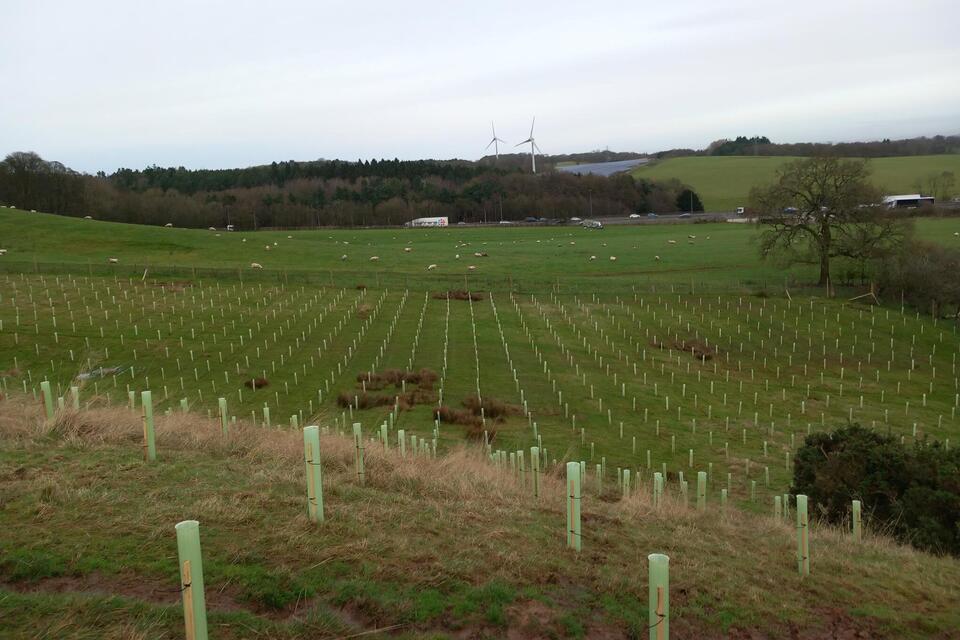
Young trees planted in rows that are protected by individual tree guards, with a deer fence in the background. Copyright: Robinson Forestry Ltd
Fast trackingÌýfunding applicationsÌý
To support theÌýproject,ÌýfundingÌýwas secured through EWCO. EWCOÌýcovers capital costs forÌýestablishingÌýa woodland.ÌýJonathan’s project qualified forÌýadditionalÌýfunding by deliveryÌýofÌýmultiple benefits including improved water quality, reduced flood risk, contributed toÌýnature recovery,ÌýandÌýprovision ofÌýaccessÌýforÌýthe local community.ÌýÌýÌý
WorkingÌýwithÌýanÌýagent, Jonathan navigated the application to EWCO through the Woodland Creation Fast Track. The land wasÌýclassifiedÌýas low sensitivity, which meant Jonathan’s application could be reviewed and approved within 12 weeks.ÌýFor this project, the entire process took just 11 weeks from start to finish, allowing planting to happen in the same year as applicationÌý– avoiding a season gap.ÌýÌý
The agent felt theÌýfastÌýtrack processÌýto be a significantÌýbenefit, helping toÌýmaintainÌýmomentum.ÌýThey areÌýnow producing a woodland management plan toÌýensure theÌýwoodland’sÌýlong-term healthÌýandÌýresilience.Ìý
Simon Smith, Forestry Agent, Robinson Forestry Ltd, said:
TheÌýfast trackÌýprocess wasÌývery positive. FromÌýinitialÌýinterest right through to planting, everything progressed on aÌýmanageableÌýtimeframe, which is really important.ÌýÌý
The Woodland Officer turned things around quickly and worked hard to keep to the timeline. It felt like a genuine priority and meant we could plan and plant without missing a season.
Unlocking theÌýbenefitsÌý
CreatingÌýtheÌýwoodlandÌýwill bringÌýa variety of significant benefitsÌýto Racecourse Farm.ÌýIn additionÌýto carbonÌýsequestration, wildlifeÌýcorridorsÌýare appearing,Ìýwhich willÌýincreaseÌýbiodiversity and allow a wider range of species to thrive.
Early signs are promising, withÌýKestrelsÌýand BuzzardsÌýhuntingÌýonÌýthe site since planting. The longer grass has developed a vole population, and theyÌýseem to beÌýrelishing this new habitat and food source.ÌýThe alder planted is thriving and alder beetle areÌýevident, whichÌýin turn has become a food source forÌýbirds.ÌýÌý
TheÌýwoodlandsÌýwillÌýalso helpÌýtoÌýprevent soil erosion and mitigate flooding by stabilising the land and regulating water flow. By providing natural screening,Ìýthe woodlandsÌýwillÌýhelp toÌýimprove air quality from emissions, as well asÌýreducingÌýthe impactÌýofÌýanti-socialÌýbehaviour fromÌýthe nearbyÌýmotorwayÌýservicesÌý–Ìýwhich will benefitÌýthe local community.ÌýÌý

Newly planted woodland around the watercourse on the farm, with rows of young trees visible inside tree guards. Copyright: Robinson Forestry Ltd
Beyond the woodlandsÌýthemselves,ÌýJonathanÌýhas aÌýlarger environmental plan,Ìýhaving alsoÌýintroducedÌýleaky dams,Ìýpond restorationÌýand 1500 metres of new hedgerowsÌýto the farm.ÌýTheÌýwoodlands are a vital piece of the larger ecological puzzle, contributing to a healthier, more resilient landscape.Ìý
Jonathan Capener, landowner, said:
Re-establishing woodland on the lower quality areas of land allows me to focus on improving the remaining pasture while creating a network of wildlife corridors that link hedgerows and woodland blocks, all as part of a masterplan to enhance biodiversity across the farm.
Tips for landownersÌý
- take your time to carefully plan and consider the financial aspects
- remember it is aÌý15-yearÌýplan,Ìýso include the detailsÌýupfrontÌýto ensure long-term success
- use theÌýfreeÌýresources availableÌýfrom theÌýForestry Commission and Forest Research, whetherÌýthat’sÌýto understandÌýwhat type of soil youÌýhaveÌýor which species would be best suited to your land
Further information
For guidance on woodland creation and information on grants and available support, visitÌýTree planting and woodland creation: overview.
To find out how other farmers and landowners are benefitting from woodland creation, visitÌýTree planting and woodland creation case studies.