UK steel industry backed by major new trade measure and strategy
UK steel producers and thousands of steel workers to benefit from a new landmark Steel Strategy and robust trade measure.
- Landmark new Steel Strategy sets ambition for up to 50% of steel used in the UK to be made in the UK, boosting production from 30%.
- UK will introduce new trade measure to support national security by preserving vital steel production for critical national infrastructure and defence.Ìý
- Steel import quotas will be reduced with higher tariffs of 50% outside of quotas, ensuring the UK steel sector’s future in the face of global overcapacity.Ìý
UK steel producers and thousands of steel workers from Glasgow to Port Talbot will benefit from a new landmark Steel Strategy as Government takes bold action to protect domestic steelmaking and build more resilience in the supply chain for critical national infrastructure and defence.Ìý
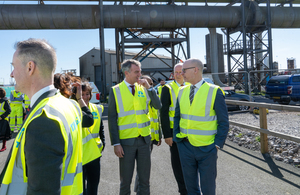
On a visit to Tata Steel Port Talbot to meet steelworkers and launch the Strategy, the Business and Trade Secretary Peter Kyle announced the Government’s ambition to boost domestic production so that it can meet up to 50% of our domestic demand for steel, and secure the industry’s role in supporting vital UK sectors like infrastructure, defence and clean energy.Ìý
Building on the direct financial support the government has made so far, the National Wealth Fund will be the government’s main mechanism for providing up to £2.5 billion of financing for investment in the steel sector this Parliament. The Steel Strategy forms a vital part of the Government’s activist and strategic approach to British industry, taking decisive action to give businesses the certainty and support they need in uncertain times and bolstering the UK’s resilience.
Today, the UK also announces that from 1 July 2026, overall quota levels for steel imports will be significantly reduced by 60% compared to current arrangements, and steel coming into the UK above these levels will be subject to a 50% tariff.Ìý
The robust new measure is a vital step to protect UK steel production in the face of global steel overcapacity. It will apply to imported steel products where they can be made in the UK.
Without action, the UK’s steelmaking capability faces real jeopardy, leaving us reliant on overseas suppliers for materials essential to our energy security, defence and transport infrastructure.Ìý
Business and Trade Secretary Peter Kyle said:
“Making steel in the UK is vital for national security, critical infrastructure and the wider economy.ÌýSteel-making is a cornerstone of our modern industrial policy that deliberately focuses support for key industries, technologies, and strategically important sectors.Ìý
“With this strategy we are closing the decades-long chapter of destructive de-industrialisation and committing instead to strengthening and sustaining Britain as a steel-making nation.”
The new Steel Strategy also commits to:
- Confirm electric arc furnaces (EAF) as the future of British steelmaking, continuing the shift from blast furnaces to cleaner, EAF-based production using recycled scrap to support net zero.Ìý
- Enable offshore wind developers to include steel manufacturers in the next round of Clean Industry Bonus applications (launching this year) to maximise UK steel use in renewables.Ìý
- Launch a cross-government working group to ensure a sustainable supply of scrap metal for UK steelmakers.Ìý
- Task the Steel Council with action on workforce needs and practical research and innovation to boost productivity and competitiveness.Ìý
Alongside the new trade measure being announced today, the Government will also be raising the UK’s maximum Most Favoured Nation (MFN) steel tariffs at the WTO to 50% to protect domestic industry in the long run from the impacts of global overcapacity.Ìý
This approach reflects feedback from government’s recent Call for Evidence, aligns with the UK’s Industrial Strategy and Trade Strategy, and follows months of engagement with UK steel producers and downstream industries.Ìý
In tandem, the Government will explore the possibility of introducing requirements to identify where steel imports are melted and poured, in order to better understand our supply chains and ensure the UK steel industry is better protected from global overcapacity.Ìý
The new measure is not about stopping steel trade: steel imports are necessary for industry and will continue. Quota allocations have been carefully designed through engagement with industry to help maintain security of supply and minimise impacts on the wider economy.
Following engagement with downstream sectors, there will be a quarterly roll-over of quotas within the year and a review of the measure after twelve months.Ìý
The UK remains committed to working with international partners, including the European Union, with whom our supply chains are so connected, to tackle global steel challenges. The UK will also continue to work through the Global Forum on Steel Excess Capacity and take forward efforts to advance WTO reform.
Further good news for the UK’s steel sector will be unveiled later today during the Nigerian State Visit, with a substantial new deal backed by UK Export Finance worth £70 million, for British Steel to supply the refurbishment of two of Nigeria’s trading ports.Ìý
Notes to editors
- The Government is engaging directly with affected stakeholders and trading partners.Ìý
- We are exploring a transitional arrangement under which the new tariff would not apply to goods under contract agreed before 14 March and imported between 1 July and 30 September 2026. We are finalising the details to ensure it gives genuine support from unexpected costs, while still protecting the UK market from excessive imports.
- Read the new Steel Strategy.Ìý
- The Steel Strategy builds on major support the Government has already put in place for the steel industry since taking office, including slashing electricity costs for producers via the Supercharger, reforming procurement rules to ensure more UK-made steel is considered for public projects and speeding up grid access for new investment projects.Ìý
- Since the Government’s intervention at Scunthorpe last year British Steel has made other important progress, including hiring new apprentices and signing significant contracts, such as supplying a Turkish rail project worth tens of millions.Ìý
- Other active government support for Britain’s steel sector and communities since taking office has included £500 million to support the construction of a new electric arc furnace (EAF) at Port Talbot, alongside over £100 million of transition funding for local businesses and to retrain ex-workers.Ìý
- The Government has also backed the Official Receiver with the funding to run a sales process for Speciality Steel UK’s sites, protecting jobs in Rotherham and Stocksbridge in the interim.Ìý
- The up to £2.5 billion of funding for the steel sector this Parliament is in addition to £500 million already earmarked for Tata Steel’s £1.25 billion transformation at Port Talbot, securing 5,000 jobs.Ìý
- In 2024, nearly 40,000 people worked across the UK steel industry, with steelmakers paying on average 32% above local average wages
- 40,000 employed in the UK steel industry sources: , and
- 32% above local average wages source:
Stakeholder quotes:
Jon Bolton, Co-Chair of the UK Steel Council, said:
“This Steel Strategy, alongside the recently published Industrial Strategy, demonstrates the government’s determination to support Foundational Industries and sets out a case for investment in the UK”s steel sector.Ìý
“Steel along with all industrial sectors is facing many external challenges emphasising the need to secure a competitive UK supply chain. A significant demand for steel in the UK supported by a positive policy landscape, a globally recognised academic knowledge base and a skilled workforce will enable the sector to arrest its many years of decline.”
Gareth Stace, Director General, UK Steel, said:
“Steel underpins our national security, our energy transition, and the delivery of critical infrastructure. Yet for too long, the UK has lacked a coherent, long‑term plan to support the sector. Today’s strategy acknowledges the essential role steel plays in every part of the economy and sets out the direction needed to attract investment, boost innovation, and strengthen our industrial foundations.
“This is a crucial moment: with global markets distorted by overcapacity and subsidy, a clear and ambitious domestic strategy is exactly what is required to ensure steelmaking not only survives in the UK but thrives.”
Community Union General Secretary, Roy Rickhuss CBE, says:
“Since taking office in 2024, the Government has taken many decisive steps to support the steel industry and those who work within it. This Steel Strategy represents the culmination of these efforts.
“The trade measure outlined in this Strategy represent a bold and significant step forward, strengthening our domestic industry and helping to ensure that local economies continue to benefit from a secure, resilient steel sector and the employment it provides.”
Sir Andrew Cook CBE, Chairman, William Cook Holdings Ltd, said:
“The Government’s measures are a recognition of the need to defend the industry from the distortions in global markets. I welcome them, and trust that we can look forward to further trade defence initiatives extending to other areas of the steel industry that are badly damaged by subsidised imports.”
Nick Haycock, Managing Director at Marcegaglia UK, said:
“Unlike some of the steel producers, we have not had any defence for our core products until now. Our markets have been badly impacted by unfair competition and this reduction in quotas offers us an opportunity to grow our domestic market share and domesticate our supply chains. Marcegaglia UK has made major investments in recent years, and these measures will lead to further job creation in our local area.”
Charlotte Brumpton-Childs, GMB National Secretary, said:
“GMB had been calling for a steel strategy for a long time - so it’s good we now have some kind of plan.
“This administration has done more for UK steel than any Government for many, many years.
“But, as ever, the devil will be in the detail and key questions around ownership of Scunthorpe and the future technology mix will be key to our members and their livelihoods.”