Annex B: impact assessments in tax information and impact notes
Updated 5 December 2025

© Crown copyright 2025
This publication is licensed under the terms of the Open Government Licence v3.0 except where otherwise stated. To view this licence, visit or write to the Information Policy Team, The National Archives, Kew, London TW9 4DU, or email: psi@nationalarchives.gov.uk.
Where we have identified any third party copyright information you will need to obtain permission from the copyright holders concerned.
This publication is available at /government/publications/budget-2025-overview-of-tax-legislation-and-rates-ootlar/annex-b-impact-assessments-in-tax-information-and-impact-notes
Annex B: impact assessments in tax information and impact notesÂ
Guide to impact assessment in TIINsÂ
The impact assessment is found towards the end of the tax information and impact note (TIIN) and sets out a summary of the impacts relevant to each tax measure.Â
Exchequer impactÂ
This section shows the impact of the measure on the forecast tax yield. Where the number is positive, it indicates that the measure is expected to increase overall tax yields by that amount, in line with the forecast. Where the number is negative, it indicates the measure is expected to decrease overall tax yields. Exchequer impact is shown in millions of pounds and, as most measures have a continuing impact, the table will always show the impacts for 5 future tax years.Â
Where exchequer impacts are significant, they are agreed with the Office for Budget Responsibility (OBR) and are shown in Table 4.1 of the Budget report. Where the exchequer impact is negligible, the impact is less than £10 million in any one year.Â
Macroeconomic impactÂ
If the measure has a significant macroeconomic impact it is certified by the OBR. This will apply where, for example, a measure affects inflation or growth.Â
Individuals and households impactÂ
This section shows the impact of the measure on individuals and households, and also the family and child poverty impact where appropriate. Where a measure imposes a significant additional cost to individuals to either take advantage of a tax relief or to perform their duties to HMRC, this is shown.Â
A quantitative impact will be shown where:Â
- each individual’s one-off cost to comply is greater than two hours (cost equivalent £30)Â
- each individual’s annual cost to comply is greater than one hour (cost equivalent £15)Â
- the total affected population had one-off and annual costs exceeding £7.5 million a year
Equalities impactÂ
This section shows the impact on protected groups, set out in the Equality Act 2010 and equivalent Northern Ireland legislation in section 75 of the Northern Ireland Act 1998. If relevant, any Welsh language impact is also shown here.Â
Section 149 of the Equality Act 2010 imposes a duty on public sector bodies to have due regard for three equality goals, which are to:Â
- eliminate discriminationÂ
- advance equality of opportunityÂ
- foster good relations between persons who share relevant protected characteristics with other peopleÂ
The relevant protected characteristics for the purposes of section 149 of the Equality Act 2010 are:Â
- ²¹²µ±ðÌý
- »å¾±²õ²¹²ú¾±±ô¾±³Ù²âÌý
- gender reassignmentÂ
- pregnancy and maternityÂ
- marriage and civil partnershipÂ
- race (including nationality)Â
- religion or beliefÂ
- ²õ±ð³æÌý
- sexual orientationÂ
Legislation in section 75 of the Northern Ireland Act 1998 sets out an equality duty to have due regard to promoting equality between persons of different religious belief, political opinion, racial group, age, marital status or sexual orientation, and also between men and women, and those with dependents.Â
Administrative impacts on business and civil society organisationsÂ
This section shows the impact on costs for business and civil society organisations. Where relevant, this section will show the overall positive or negative impact on these organisations. It will also show the additional costs to businesses of implementing the measure, including familiarisation costs (for example, reading related legislation or learning new procedures and processes). For tax measures, costs are calculated using the ‘Standard Cost Model’. Where the costs are significant, they are set out in a compliance cost table. Most measures do not have a significant cost.Â
Consideration of the impact on business will take account of the following:Â
- the number of affected businessesÂ
- sectoral and particular market impactsÂ
- annual and one-off compliance costs, where there is a compliance cost or saving greater than £100,000 a year or £5 million on a one-off basis
Three different levels will be shown:Â
- no impactÂ
- negligible impact, where the impact is below the £100,000 annual and £5 million one-off cost or savingÂ
- significant impact, where the impact is over at least one of the thresholds and a cost table is shownÂ
This section deals separately with the small and micro business impact (for businesses with up to 49 full time equivalent employees) and shows the extent to which they are included in the measure, consultation undertaken, and any steps taken to reduce the impact on this sector.Â
Operational impactÂ
This section shows the cost to HMRC or other government departments in implementing the measure, and where relevant indicates how the measure will be implemented.Â
Other impactsÂ
This section deals with the other impacts which may result from a measure. Impacts are only shown where relevant to a measure and include:Â
- wider environmental impact and carbon assessmentÂ
- justice impactÂ
- competition impactÂ
- health impactÂ
Ministerial sign off for tax impact and information notesÂ
I can confirm that Treasury Ministers have read the tax impact and information notes published on 26 November 2025 and are satisfied that, given the available evidence, each represents a reasonable view of the likely costs, benefits and impacts of the measures.
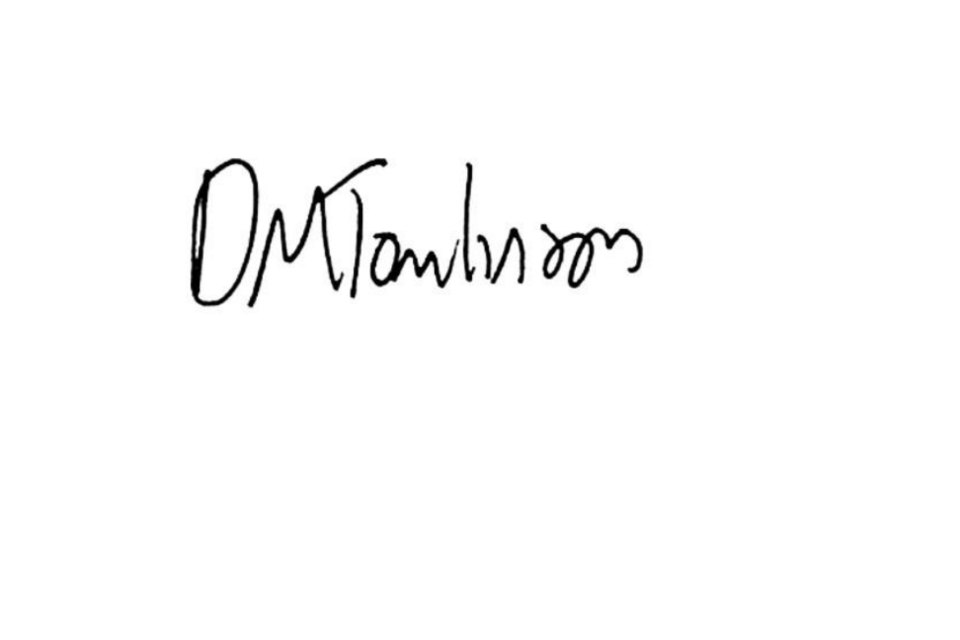
Dan Tomlinson MP, Exchequer Secretary to the Treasury