Pursuing Housing Benefit overpayment recovery effectively: Good practice guide
Updated 2 March 2026

© Crown copyright 2026
This publication is licensed under the terms of the Open Government Licence v3.0 except where otherwise stated. To view this licence, visit or write to the Information Policy Team, The National Archives, Kew, London TW9 4DU, or email: psi@nationalarchives.gov.uk.
Where we have identified any third party copyright information you will need to obtain permission from the copyright holders concerned.
This publication is available at /government/publications/housing-benefit-overpayment-recovery-good-practice/pursuing-housing-benefit-overpayment-recovery-effectively-good-practice-guide
Introduction
1. The Pursuing Housing Benefit overpayment recovery: Good practice guide has been updated to reflect learning from the Department for Work and Pensions (DWPs) consultancy work with local authorities (LAs), including the national DWP Debt recovery good practice workshops that concluded in 2024.
2. The guide includes good practice on managing Housing Benefit (HB) debt andÌý covers:Ìý
-
high level requirementsÌý
-
managing HB »å±ð²ú³ÙÌý
-
processes and proceduresÌý
-
monitoring »å±ð²ú³ÙÌýÌý
-
effective recoveryÌý
-
management information (MI) and reportsÌý
-
HB debt recovered by DWPs Debt ManagementÌý
-
HB Debt Service (HBDS)Ìý
-
writing off »å±ð²ú³ÙÌý
-
Annex A: What a good HB recovery team looks likeÌý
-
Annex B: Summary on the powers to recover HB debt through a Direct Earnings Attachment without County Court actionÌý
-
Annex C: Findings from a review of some HB debt recovery top performersÌý
-
Annex D: An effective HB overpayment recovery timelineÌý
-
Annex E: Text only transcript of the infographics at Annex D
3. This guide is not designed to replace the HB Overpayments Guide to which LAs should still refer. The following information has been developed over time and builds on previous good practice DWP has published in partnership with LAs. We advise all LAs to use this guide to ensure that they are doing all they can to maximise recovery options and make maximum use of networks and intelligence to support the recovery process.
4. Debt recovery should always be proportionate and take account of the debtor’s personal circumstances. Whilst this guide lays out a set timeline for debt recovery, LAs should always treat each case individually and ensure they adhere to related council policies, for example anti-poverty strategies, supporting vulnerable claimants, expected behaviours of debt collection agencies. LAs should always consider any informal reasonable offer for repayment before taking any formal action.
High level requirements
5. LAs should have procedures in place to prevent HB overpayments occurring. However, when they do occur, there should be clear overpayments policies and procedures, readily available to all relevant employees, which will allow them to:
-
identify overpayments promptlyÌýÌý
-
stop the overpayment continuingÌýÌý
-
calculate the overpayment correctly, considering underlying entitlementÌýÌý
-
correctly classify overpayments and decide whether they are recoverable and, if so, from whom and whether to recoverÌýÌý
-
notify claimants and other affected persons quicklyÌýÌý
-
pursue recovery by the speediest, most cost effective and efficient methods available in line with legislation, having regard to policy issues such as the wider consequences of recovery actionÌýÌý
-
ensure there is effective financial control during the entire process
6. Firm and fair action taken by the LA in administering HB overpayments will have the effect of encouraging claimants or their representatives to give correct and timely information regarding their claim and deter benefit fraud.
Managing Housing Benefit debt
7. Good practice includes:
-
ensuring documented Member endorsed overpayments policies and procedures are used and adhered to by the relevant employees to ensure that overpayments are brought to account, are under appropriate financial control and there is an audit trail for all decisions on recoverability, classification, recovery, and write-offÌý
-
publicising policy to pursue the recovery of all overpayments that are recoverableÌýÌý
-
reviewing strategy, policies, and procedures for continued relevanceÌýÌý
-
confirming who misrepresented or failed to disclose information which caused the overpayment, so that the correct debtor can be pursuedÌý
-
ensuring processes are efficient as they can be from the issue of the notification and invoice through to the first repaymentÌý
-
ensuring the final overpaid amount, considering any underlying entitlement to benefit is calculated, on average, within a period of 14 days following the date that the LA receives sufficient information about the changeÌý
-
providing information to claimants, with their invoice, explaining what an overpayment of HB is, how they can appeal, what to do if they have any difficulty repaying the debt and what will happen if they refuse to repay itÌýÌý
-
allowing a calendar month before imposing recovery enforcement action. However, an invoice or reminder should still be sent within that calendar monthÌýÌý
-
considering setting financial minimum limits for different recovery methods to ensure cost effectivenessÌý
-
ensuring Members and recovery staff are aware of the positive financial impacts for the LA of increased HB °ù±ð³¦´Ç±¹±ð°ù²âÌýÌý
-
reviewing the LA recovery team’s structure to ensure it is as effective as it can be and that HB debt recovery has the relevant profile (see Annex A)
Monitoring debt
8.Good practice includes:Ìý
-
ensuring claimants have a full understanding of their total debt, including debt that may be on other IT systems such as legacy and housing systemsÌýÌý
-
setting targets for the recovery of new and old debt and monitor performance against those targetsÌý
-
producing regular reports for analysis and targeted review focus (see the MI and reports section further on)
Effective debt recovery
Good practice includes:
-
setting out a recovery plan for each case prior to taking any action, as there is little point in pursuing a debt if there is no prospect of recovering it by a recovery method that will not succeedÌý
-
ensuring that administration processes fully support the effective recovery of any subsequent overpayment by:Ìý
-
capturing telephone numbers (land and mobile) and email addresses so that contact can be made with debtors by phoning, text messaging and email, as required, throughout the recovery process. Do note that many LAs find text messaging and emails far more effective than contact through phoning, as debtors find this less intrusive and can respond at a convenient time to themÌý
-
ensuring that an income and expenditure form is completed if a debtor claims hardship and a set procedure exists for reducing repayment amounts once this form has been submittedÌýÌý
-
making use ofÌý Direct Earnings Attachment (DEA) powers (without the need for County Court action) intelligently (see Annex B), so that a DEA can be used in appropriate circumstancesÌýÌý
-
considering the following methods when using DEA ±è´Ç·É±ð°ù²õ:Ìý
-
reviewing the income tab within Searchlight which can provide some earnings information to support early discussions about repayment with claimantsÌý
-
making use of employer details gathered from the HBDS (see further good practice below)Ìý
-
checking the income and expenditure form for any employer detailsÌý
-
benefit processors capture full details of employer when a claimant declares workÌý
-
using any ‘employer’ tracing technology where the employer is unknownÌý
-
ensuring that maximum rates of deductions are in place for both ongoing recovery and instalments, reviewing existing recovery rates regularly (reissuing income and expenditure forms to debtors that have previously agreed reduced repayments to ensure that the recovery rate remains appropriate)Ìý
-
considering the use of half certain disregards to increase the rates of deductionsÌýÌý
-
ensuring that processes are in place to identify any breakdown in instalment repayments immediatelyÌý
-
ensuring that where the debt is sufficiently large, County Court procedures are used (but only if you have a realistic prospect of recovery)Ìý
-
ensuring the overpayment timeline for recovery action is smart (see suggested timeline at Annex D or Annex E for the text only transcript)Ìý
-
keeping in view the largest debts (depending on the size of the LA) to ensure all appropriate action is takenÌýÌý
-
putting in place a collection and monitoring policy and systems to monitor the recovery of Administrative PenaltiesÌý
-
using debt collection agency services intelligently, creating competition where possible by using more than one agentÌý
-
using credit reference agency information to support the recovery processÌý
-
agreeing with other LAs to recover overpayments from claimants who move away from the area and vice versaÌý
-
ensuring that debt recovery teams work closely with DWPs Counter Fraud, Compliance and Debt if appropriate. Any recovery of a fraudulent overpayment should appear seamless to a debtor and should appear to them to be a natural progression of the fraud investigation (arrange to speak with the debtor as part of the fraud sanction process to commence recovery at the earliest opportunity)Ìý
-
networking with other LAs to learn lessons and share good practiceÌý
-
setting up a benchmarking overpayment recovery liaison group with other authoritiesÌý
-
using national published HB Recoveries and Fraud data to support benchmarking, both locally and nationally.
Management information and reports
9.The good practice outlined in the sections above (monitoring debt and effective debt recovery) will be supported by producing relevant reports for analysis.
Good practice includes:
-
producing regular reports for management on:Ìý
-
types of debts raisedÌý
-
numbers of debts raisedÌý
-
value of LA error overpaymentsÌýÌý
-
total value of overpaymentsÌýÌý
-
reason for overpaymentsÌýÌý
-
³¦±ô²¹²õ²õ¾±´Ú¾±³¦²¹³Ù¾±´Ç²ÔÌý
-
deduction amounts being used – ensuring annual uprating of deductions have embeddedÌý
-
providing annual or more frequent reports to Members on the:ÌýÌý
-
level of »å±ð²ú³ÙÌý
-
age of »å±ð²ú³ÙÌýÌý
-
percentage of debt recovered (both in year and as a percentage of total debt outstanding).Ìý
-
-
considering generating the following reports on a regular basis:Ìý
-
aged debtor report (ongoing and sundry debtors (invoices))Ìý
-
ongoing recovery from benefits showing date of debts, amount of original overpayment, classification, outstanding debts, and recovery deduction amountÌýÌý
-
debts on the benefit system with no recovery action, stalled action and suspended showing date of debt and last action dateÌý
-
sundry debtors where invoice has been issued and recovery in placeÌý
-
sundry debtors with recovery instalments in place showing date of debt, total debts, recovery amount and outstanding »å±ð²ú³ÙÌý
-
sundry debtors where recovery has stalled showing recovery actions taken and datesÌý
-
sundry debtors invoice issued and no recovery actionÌý
-
debts recovered by DWPs Debt ManagementÌý
-
debts being recovered through DEA and last deduction amount and dateÌý
-
deduction defaulter reports that are acted upon promptlyÌý
-
debts recovered from landlordsÌý
-
debts sent to debt collection agencies and last deduction amount and dateÌý
-
list of debts classified as fraud.
-
Housing Benefit Debt recovered by the Department for Work and Pension’s Debt Management
HB debt can be recovered from Universal Credit (UC) and non-UC benefits. LA should refer to the HB adjudication and operating circular HB A9/2025 for the full procedural guidance.ÌýÌý
Good practice includes:Ìý
-
refraining from pursuing recovery form other methods once the debt has been referred to Debt Management regardless of the LA not yet receiving any payment from DWPÌý
-
ensuring regular debt reconciliation on receipt of the monthly payment schedule from DWP to ensure any balance discrepancies are rectified immediately  Ìý
-
ensuring regular housekeeping of caseload to include monitoring recovery
Housing Benefit Debt Service
The HBDS (Housing Benefit Debt Service) is a free to use service for LAs allowing access to employment and income information to support the recovery of HB debt.Ìý
The HBDS guidance for LAs can be found on Glasscubes.Ìý
LAs can use information provided by HM Revenue and Customs (HMRC) to assist in:Ìý
-
agreeing a repayment arrangement with the claimantÌý
-
applying for a DEA and / orÌý
-
providing up to date claimant contact details where there has been a loss of contact between the LA and claimant.Ìý
Good practice includes:Ìý
-
using Searchlight to establish any Pay As You Earn (PAYE) earnings/pensions information in real time on Searchlight before submitting a debt case into the HBDS processÌý
-
where there is PAYE earnings/pensions information shown on Searchlight or returned through HMRC, contacting the debtor to negotiate payment in full or agreeing a recovery plan prior to applying for a DEA Ìý
-
cleansing historical debt using the tools availableÌý
-
considering matching against larger debts that have previously been written offÌý
-
considering resource capacity to act on returned informationÌý
-
considering prioritising action on the returned data. The priority is down to each LA to decide but might include:Ìý
-
tackling those debts with the largest amount outstandingÌý
-
tackling debtors earning the highest amounts (greater capacity to repay)Ìý
-
focusing on overpayments classified as fraud, where higher rate DEAs can potentially be applied.Ìý
-
contacting the debtor to negotiate payment in full or agreeing a recovery plan prior to applying for a DEA where the LA has found there is PAYE earnings/pensions information shown on Searchlight or returned through HMRC Replace version in related comment
Writing off debt
Good practice includes:Ìý
-
ensuring debt is only written off, by an authorised officer, in accordance with the LAs corporate or benefit service’s write-off policies after all avenues of recovery that the LA considers appropriate have been consideredÌýÌý
-
ensuring the LAs bad debt provision is large enough to cover written off HB overpaymentsÌýÌý
-
notating system / system flagging of written off outstanding overpayments when benefit is no longer in payment, in the event of future benefit award, or other change of circumstances, to enable recovery in the futureÌýÌý
-
reviewing debt that has been written off on a regular basis and consider recommencing recovery action (particularly larger debts)
What a good Housing Benefit recovery team looks like
Recovery teams can vary both in structure and size but it is essential that all recovery officers:Ìý
-
are well trained and motivated in recovery work, with sound knowledge, wider awareness of debt issues and empathy for its debtorsÌý
-
have good communication, negotiation, and organisational skills and use their initiative and take ownership of the recovery processÌý
-
are encouraged to be innovative, looking for a better, leaner, more efficient way of workingÌý
-
have clear procedures and targetsÌýÌý
-
are effective both within team and across team working; and explore innovative information sharing (within existing data sharing rules)Ìý
-
are part of a network with other organisations, able to build and maintain strong working relationships with all relevant stakeholdersÌý
-
make good use of current availability to ‘enabling’ technologyÌý
-
keep up to date with legislation and use existing powers to their advantage wherever possibleÌý
-
use adequate software that is fit for purposeÌý
-
make full use of multiple payment options
Summary on the powers to recover Housing Benefit debt through a Direct Earnings Attachment without County Court action
-
The supported by the introduced DEAs from April 2013. A DEA allows for recovery of overpaid HB directly from a debtor’s earnings without having to apply via the court system.ÌýÌý
-
DWP can provide, on request, a package of draft letter templates that can be used by LAs in the recovery process, subject to amending them for their own purposes and making it clear that payment is to be made to the LA and not to DWP. Send requests for the pack and any other policy queries to debtpolicy.focalpoint@dwp.gov.uk.ÌýÌý
-
It is good practice to send an initial ‘Letter Before Action’ to the debtor prior to any action being taken to initiate a DEA. The wording can be added to the LA’s final demand letter to expedite the process. This gives the debtor the opportunity to make voluntary payment arrangements before the DEA is started. However, when accepting a recovery rate from a debtor the LA should have reference to the amount they could recover through a DEA and take this into account in its decision-making process.Ìý
-
A DEA cannot be requested against a partner’s earningsÌý
-
The LA can use a DEA in preference to recovery from benefit if the debtor is in receipt of another benefit but not in receipt of HB. However, the policy intent of DEAs is that they are only used if the debtor fails to engage with the LA and make a reasonable repayment offer or defaults on an agreed arrangement.
Findings from a review of some Housing Benefit debt recovery top performers
Between July and August 2024, DWPs Performance Development Team (PDT) contact five top performing LAs for debt recovery against total debt outstanding for the financial year ending March 2023.Ìý
All five LAs were achieving between 38% and 44% recovery of all outstanding debt.ÌýÌý
The aim was to try to identify areas of good practice that could be shared with all LAs.Ìý
In summary, PDT found the communality between these LAs was:Ìý
-
they prioritised debt recoveryÌý
-
high levels of staff knowledgeÌý
-
dedicated resourcesÌý
-
focused on the prevention of overpayment occurringÌý
-
detailed MI reports made available and used regularlyÌýÌý
-
DEA and recovery from DWP benefits were the most favourable recovery methods
Annex D: An effective Housing Benefit overpayment recovery timeline
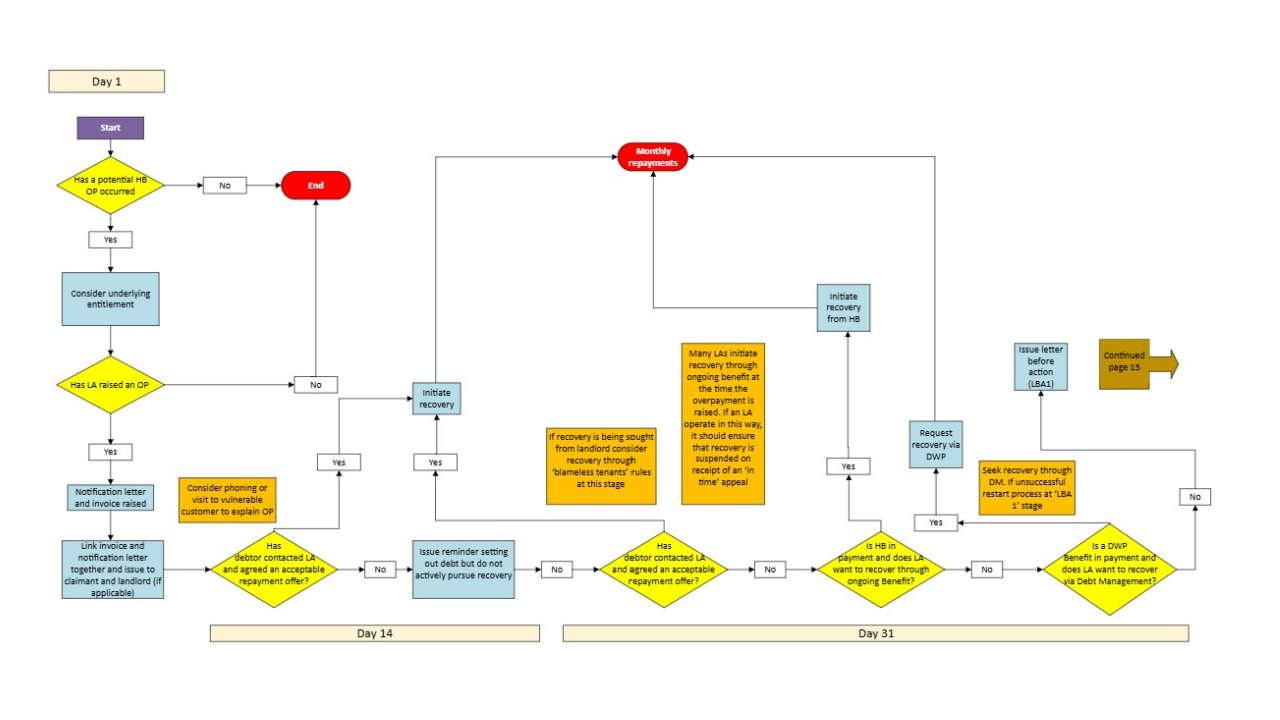
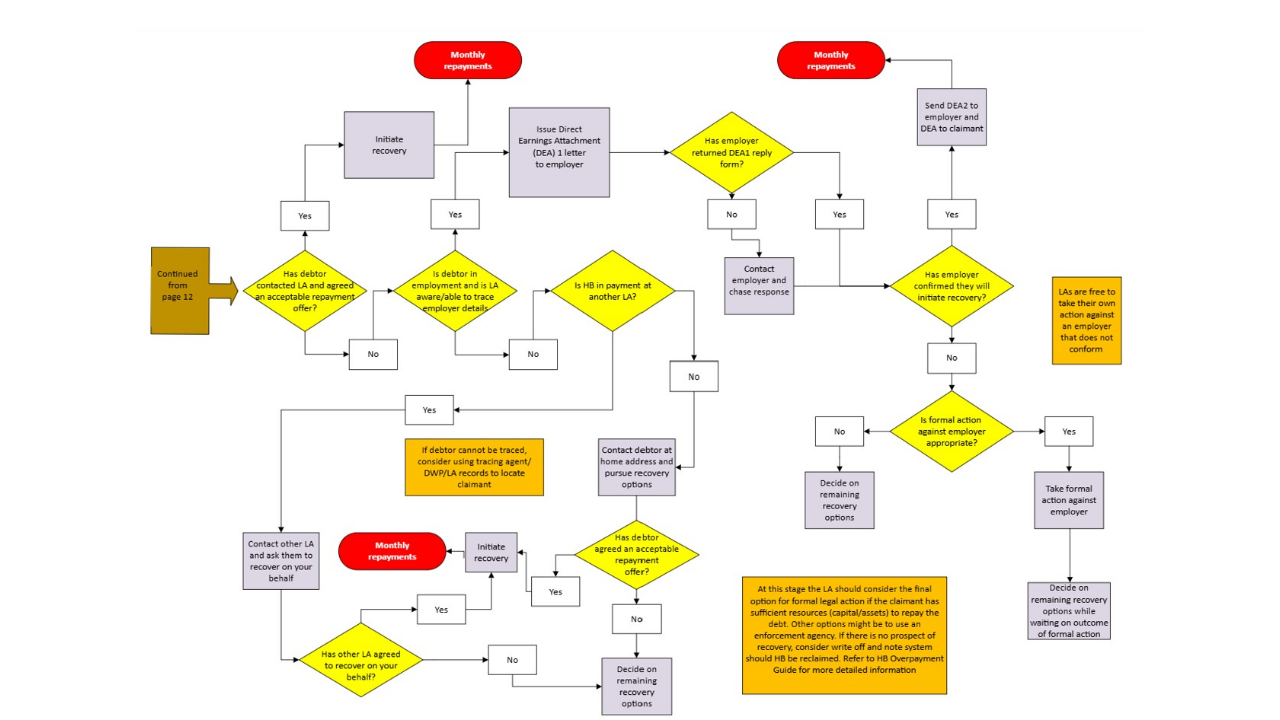
Annex E: An effective Housing Benefit overpayment recovery timeline (text description)
The following outlines the decision-making process and actions involved from Day 1 of a Housing Benefit (HB) overpayment occurring and the recovery of the overpayment.
Day 1
StartÌý
Has a potential HB Overpayment occurred?ÌýÌý
No, an overpayment has not occurred → EndÌýÌý
Yes, an overpayment has occurred → Instruction: Consider underlying entitlement.ÌýÌý
Has LA raised an overpayment?ÌýÌý
No, the LA has not raised an overpayment→ EndÌýÌý
Yes, the LA has raised an overpayment → Instruction: Raise notification letter and invoice.Ìý
Instruction: Link invoice and notification letter together and issue to claimant and landlord (if applicable).Ìý
Statement: Consider phoning or visit to a vulnerable customer to explain overpayment.Ìý
Statement: Many LAs initiate recovery through ongoing HB at the time the overpayment is raised. If an LA operates in this way, it should ensure that recovery is suspended on receipt of an ‘in time’ appeal.
Day 14
Has the debtor contacted LA and agreed an acceptable repayment offer?Ìý
Yes, the debtor has contacted the LA, and an acceptable repayment offer has been agreed → Instruction: initiate recovery.ÌýÌý
No, the debtor has not made contact → Instruction: Issue reminder setting out debt but do not actively pursue recovery.
Day 31 (Monthly repayments)
Statement: If the recovery is being sort from a landlord consider recovery through ‘blameless tenants’ rules at this stage.Ìý
Has the debtor contacted LA and agreed an acceptable repayment offer (monthly repayments)?Ìý
Yes, the debtor has contacted the LA, and an acceptable repayment offer has been agreed → Instruction: Initiate recovery (monthly repayments).Ìý
No, the debtor has not made contact → Is HB in payment and does LA want to recover through ongoing benefit?Ìý
Yes, HB is in payment → Instruction: Initiate recovery from HB (monthly repayments).Ìý
No, HB is not in payment → Is a DWP benefit in payment and does the LA want to recover via Debt Management?Ìý
Yes, a DWP benefit is in payment, and the LA wants to recover via Debt Management→ Instruction: Request recovery via DWP (monthly repayments).Ìý
Instruction: Seek recovery through Debt Management. If unsuccessful restart process at Issues letter before action (LBA1) stage.Ìý
No, the debt is not to be recovered via Debt Management → Instruction: Issue letter before action (LBA1)Ìý
Has the debtor contacted LA and agreed to an acceptable repayment offer?Ìý
Yes, the debtor has contacted LA and agreed an acceptable repayment offer → Instruction: Initiate recovery (monthly repayments).Ìý
No, the debtor has not made contact → Is debtor in employment and is LA aware/able to trace employer details?Ìý
Yes, the debtor is employed → Instruction: Issue Direct Earnings Attachment (DEA) 1 letter to employer.Ìý
Has employer returned DEA 1 reply form?Ìý
No, the employer has not returned the DEA1 reply form → Instruction: Contact employer and chase response.Ìý
Is formal action against the employer appropriate?ÌýÌý
Yes, formal action against the employer is appropriate → Instruction: Take formal action against employer. Decide on remaining recovery options whilst waiting outcome of formal action.Ìý
Statement: LAs are free to take their own action against an employer that does not conform.Ìý
No, formal action against the employer is not appropriate → Instruction: Decide on remaining recovery options.Ìý
Statement: At this stage, the LA should consider the final option for formal legal action if the claimant has sufficient resources (capital/assets) to repay the debt.ÌýÌý
Statement: Other options might be to use an enforcement agency.Ìý
Statement: If there is no prospect of recovery, consider write-off and note the system should HB be reclaimed.ÌýÌý
Statement: Refer to the HB Overpayment Guide for more detailed information.Ìý
Yes, the DEA1 has been returned → Has the employer confirmed they will initiate recovery?Ìý
Yes, the employer has confirmed they will initiate recovery → Instruction: Send DEA2 letter to employer and DEA to claimant to initiate recovery (monthly repayments).Ìý
Is debtor in employment and is LA aware/able to trace employer details?Ìý
No, the debtor is not employed→ Is HB in payment at other LA?Ìý
Yes, HB is in payment at other LA → Instruction: Contact other LA to recover on your behalf.Ìý
No, HB is not in payment at other LA → contact debtor at home address and pursue recovery options.Ìý
If a debtor cannot be traced, consider using a tracing agent or DWP/LA records to locate the claimant.ÌýÌý
Has other LA agreed to recover on behalf of your LA?ÌýÌý
Yes, other LA has agreed to recover on behalf of your LA → Instruction: Initiate recovery (monthly repayments).ÌýÌý
No, other LA cannot recover on behalf of your LA → Instruction: Decide on remaining recovery options.ÌýÌý
Statement: At this stage, the LA should consider the final option for formal legal action if the claimant has sufficient resources (capital/assets) to repay the debt.ÌýÌý
Statement: Other options might be to use an enforcement agency.ÌýÌý
Statement: If there is no prospect of recovery, consider write-off and note system should HB be reclaimed.ÌýÌý
Statement: Refer to the Housing Benefit overpayments guide for more detailed information.