Chancellor's speech at Make UK (EEF)
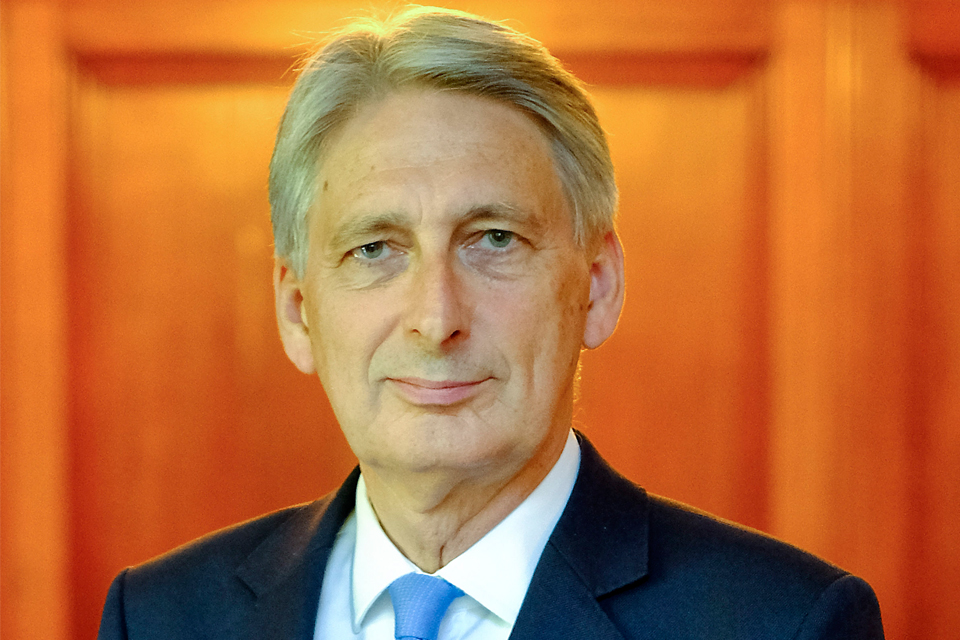
Speech by the Chancellor of the Exchequer, Philip Hammond MP, at Make UK's (EEF) annual dinner.
Thank you, for that introduction.
I am delighted to be here tonight, as you start a new chapter in the history of EEF. And it has been a fascinating history.
EEF as an organisation was founded in 1896, at a time when the second industrial revolution was just gathering pace; with new technologies being deployed across industry at breakneck pace.
That was the year the first wireless radio transmission was demonstrated right here in London. I haven’t heard the recording, but I’ve no doubt a then quite young John Humphrys did a good job of grilling some hapless politician.
As Judith also mentioned, 1896 was also the year the Daily Mail launched. What she was too diplomatic to mention was that the first ever edition carried an op-ed on the front page that confidently asserted that, and I quote: “the motor carriage will never displace the smart trotting pony or the high-stepping team”, and called for the restoration of a “two mile per hour speed limit”. Finger on the pulse – then as now!
Just in the interest of balance, when I proposed changing the speed limit it was supported by the Mail.
Today, we are more focused on when the motor carriage driver will be replaced by a computer. But we share with the turn of the 19th century a sense of living through a time of blistering change, as innovations in areas such as robotics, biotechnology, artificial intelligence and blockchain transform our economy – and nowhere is that truer than in the manufacturing and engineering sectors.
So it is entirely appropriate that you have chosen this moment to change from EEF to ‘Make UK’ – reflecting the diversity of the modern manufacturing sector. And I wish you every success in your new guise.
Let me first say a few words about last night’s news from Honda. As Greg Clark told the House this afternoon, this is clearly a bitter blow for the 3,500 skilled and dedicated workers at Honda in Swindon, and the many people whose lives will be affected – either because the companies they work for are part of the supply chain, or because they are part of the community around the plant.
Greg has spoken with the trades unions, the local MP, the Leader of Swindon Borough Council and the Chair of the Local Enterprise Partnership…
…and will shortly chair the first meeting, in Swindon, of a taskforce he’s put together to marshal government efforts to do everything we can to ensure that the much-valued workforce can find new opportunities to make use of their skills and experience.
The decision of Honda is, of course, a blow.
But despite the shock of this announcement, we must not lose sight of the fact that Britain remains a dynamic and open economy…
…that just this morning we saw record high employment numbers, and ten-year high real wage growth figures…
…and that we are an economy that has grown continuously for nine straight years…creating 3.4 million net new jobs in the process.
Our challenge is to maintain that performance, at a time of transformative change in our economy, with the technology revolution changing Britain’s economy, society and, indeed, politics in ways that we can barely predict.
But as Judith has said, the change uppermost in all our minds is, of course, our future relationship with the EU.
I understand that the ongoing uncertainty is a challenge for many of you in this room. And that the prospect – however small - of leaving without a deal is already too great, and is having very real consequences as you make difficult decisions about managing supply chains, about hiring people, about where and when to invest.
I understand the frustration in the business community about the pace and sometimes opacity of the democratic process.
I cannot make that frustration go away, but what I can attempt to do is to explain what we are doing to resolve this uncertainty.
Our priority remains avoiding a No Deal outcome, and that will be my unwavering focus. It is clear that leaving the EU without a deal would deliver a damaging short-term shock and would undermine our future prosperity and security – and in my view that would represent a betrayal of the promises about Brexit that were made during the referendum campaign.
So the solution lies in getting the PM’s deal through Parliament. That is the only way to both respect the referendum result and also supporting the economy, protecting jobs, and allowing us to leave, via an Implementation Period, in an orderly fashion, to a continued close trading partnership with our nearest neighbours.
Doing so means seeking a route to address the very specific objections that have been raised in the House of Commons. That’s our objective.
A legally binding change to the Withdrawal Agreement to ensure the backstop could not persist indefinitely would not satisfy all of my colleagues – but it would deliver the core of a majority for a deal in the House of Commons.
Such a change is not a straightforward task, and will require a spirit of compromise on both sides.
The so-called “Malthouse” initiative to explore possible alternative arrangements to the backstop, is a valuable effort in that direction.
It builds on an important concession we gained in the Withdrawal Agreement, in being able to propose alternative arrangements to the backstop – and it should be a major ongoing strand of our work, continuing at pace during the Implementation Period; one in which I hope and expect the EU will take an active part.
But, however promising as an alternative arrangement to avoid entering a backstop in the future, it is clear that the EU will not consider replacing the Backstop with such an alternative arrangement now, in order to address our immediate challenge.
The details of this initiative are still evolving, and would require significant changes to EU legislation and Customs practices that would need to be negotiated with the EU member states and others who will be affected by them.
So over the next few days, Members of Parliament need to think long and hard about the choice before them; Our partners in the EU need to be at their pragmatic best in helping to avoid the mutual calamity of no deal; and you – and we – need to carry on explaining the implications of a no deal exit, no matter who cries “Project Fear”: Because it’s our duty to communicate the reality of the situation, to the people we represent.
So our most urgent task is to secure a deal that will protect our future relationship with our closest neighbours and most important trading partners.
But however close that future relationship, it will not be as close as the one we have now. So there will be change ahead.
Our country has always seen itself as somewhat distinct from our European neighbours; somewhat more global in outlook.
Brexit will be our chance to show that we can combine a strong and continuing partnership with the EU, with a new focus on building on our historic overseas relationships, and forging new links with the fastest growing economies of the world.
Because that world is changing around us – a rapidly growing middle class, huge advances in innovation and technology, and a shift in the balance of wealth and power all mean the opportunities have never been so great.
But these emerging markets are a competitive place, and the key question for the UK will be: how do we establish our competitive advantage in this fast-changing, globalised world? How do we set out our stall in the bustling international marketplace of the 21st Century?
We have a choice:
Some people – on both the left and right – would have us fight again the economic battles of the past: at one extreme, an agenda of widespread nationalisation, penal taxation and heavy state regulation; at the other extreme, a slashing of tax rates and shredding of regulation.
Neither would deliver what is needed for our competitiveness as a 21st century mature economy with an ageing population.
So, I am clear that as Britain rethinks its competitive advantage in an ever more globalised world, we must factor in the changes happening around us and engage with the world as it is, not as it once was; we must find solutions rooted in the pragmatism for which this country is rightly famous, not in populist rhetoric
That means building on the distinctive strengths that we already have as a country. And my message to you tonight is that Britain’s modern manufacturing sector is and must remain one of those distinctive strengths and competitive advantages.
If we can get it right, your sector can prosper under our unavoidably more global outlook in the future – and be a core part of the high-tech, high-skill ecosystem that defines the future economy we want to build.
I want to say a few words about what we are doing – and what we need to do – to deliver on that ambition, in three specific areas – skills, innovation and infrastructure – and I hope in doing so, I may provide a worthy response to some of the challenges Judith posed in her opening remarks.
The first priority for any business these days, as all of you know, is skills; making sure you have the right people to make your business grow.
For too many years, our education system has been too focused on getting people into university, at the expense of other routes into work…
…focusing on the top level skills of the few, at the expense of the more practical capabilities of the many…
…and in doing so, we’ve hollowed out our manufacturing skills base…
…so that all too often the demographic profile of skilled workers inside companies looks even more daunting than the demographic profile of the country as a whole.
But we are changing that.
We know that the skillset we need for our advanced manufacturing industry requires us to focus, not just on degree level skills, but also on a wide range of specialist, technical skills.
That’s why we are reasserting the importance of technical education in our national life – so that we can more effectively train the next generation of engineers, to make sure that employers have the skills they need, and young people are match fit for the labour market of the future.
To do that, we have committed £500 million a year to introducing a new system of T-level vocational training…
…We’ve put the first £100 million into the new National Retraining Scheme, to make sure that British workers can face the challenge of technological change without fear…
…and through the Apprenticeship Levy we are delivering 3 million high quality apprenticeships in this Parliament.
But, of course, we want to work with industry as we deliver these reforms.
Judith – you challenged me on progress we’re making with the apprenticeship levy.
We have heard your concerns loud and clear – and taken action:
- halving the co-investment rate from 10 to 5%
- increased the amount you can transfer to your supply chain to 25%
- we’ve put millions into the Institute for Apprenticeships
- and we’re committed to consulting on how the levy operates in the future through an engagement process, which has already begun
We’ve conducted a series of regional roundtables with 59 employers attending to date – including an EEF policy advisor - and it’s only the 19th of February.
And may I also say in response to your plea for a nationwide rollout of the North West pilot of “Made Smarter”, that I am delighted by your enthusiasm for this ground-breaking programme. But it was only launched in November, and the point of piloting is to learn what works and what doesn’t. But I can absolutely promise you that what works will be rolled out in due course.
As well as making sure that British workers have the skills they need to thrive and prosper, we must also invest in the technologies of the future.
Our history is one of innovation – we are the nation of Stephenson, Faraday and Whittle. And today, Britain can lead the world again as we exploit a new wave of scientific and technological discovery pouring out of our world class Universities and our industrial research centres.
I do not need to tell the people in this room about the impact of this technological progress on the economy – just think of the changes you have seen over the last twenty years in automation, materials and manufacturing techniques. And everyone is familiar with the stats that point to Britain’s leading role in scientific research: With just 4 percent of the world’s researchers, but 15 percent of the world’s most highly cited articles.
But the leap from research lab to commercial product does not happen by accident.
And for too long, while we’ve been brilliant at invention and discovery, we have been near the bottom of the class in exploiting that home-grown genius to drive our own industry. But I’m glad to say that is changing.
And the manufacturing sector is at the forefront: you constitute 10% of the UK economy, but provide 66% of all business expenditure on research and development.
Since 2016 we have committed an additional £7 billion to science and innovation. This 20% increase is the sharpest and most sustained rise in public R&D investment since records began - clear progress towards our ambition for a government-industry partnership to lift economy-wide R&D spending to reach 2.4% of GDP by 2027.
But although government intervention is important, we understand that private enterprise is the real engine of innovation. So we are also making sure that the conditions are right for you as leaders and entrepreneurs to be able to invest in growing your businesses.
Support for businesses through R&D tax reliefs has tripled since 2010.
One of the areas EEF have been rightly challenging us on is capital investment incentives – and we have acted.
At Budget 2018 I increased the Annual Investment Allowance from £200,000 to £1 million for two years, providing hundreds of millions of pounds more tax relief
…and I also introduced a new, permanent ‘Structures and Buildings Allowance’, providing billions of pounds of new tax relief for firms investing in new non-residential buildings and structures – delivering a long-standing demand from industry.
And what is good for individual businesses is also good for the economy and for households – increasing productivity is the only sustainable way to boost real wages – and rising real wages are the sure-fire way to sustain a contented and stable workforce – and a satisfied electorate. A coincidence of objective that business people and politicians can celebrate together.
Today’s real wage growth figures are good news – but only sustainable if backed by productivity growth. And boosting our productivity also means investing in infrastructure, because even with the best staff and the most high-tech equipment in the world, your businesses won’t succeed without roads to transport your goods, railways to transport your staff, or fast broadband to deliver the digital lifeblood that sustains all modern businesses.
The cornerstone of our plan to boost productivity is the National Productivity Investment Fund, £37 billion of funding through to 2023-24 on top of the core investment in roads, rail, R&D, housing, and social infrastructure – specifically targeted at raising Britain’s productivity.
Together, these programmes are modernising our strategic roads network – which carries two-thirds of all freight
…delivering the biggest rail programme since Victorian times…
…and bringing our digital infrastructure up to date, with a strategy for delivering a nationwide full fibre network by 2033.
And we are supporting industry to make the transition to a low-carbon economy, with £315 million for a new Industrial Energy Transformation Fund, which will help businesses with high energy use – like those in your sector – to cut their bills and reduce their emissions…
…all of which together means over the next five years, total public investment will grow by 30%, to its highest sustained level in 40 years.
Judith, to return to your challenges, I hope I have shown this evening how government understands its role in supporting UK industry through the coming tech revolution, and in driving up productivity for the benefit of our businesses and our citizens – delivering our vision of a high-wage, high-skill economy.
The Modern Industrial Strategy encapsulates our clear commitment to play that role.
And sets out our plan to do it:
By putting technical skills back at the heart of our education system…
…investing in new technologies and innovation…
…modernising our roads and railways…
…cutting taxes for workers and for the businesses that employ them…
…reducing your energy costs – and your carbon footprint…
…doing everything we can, in other words, to make sure that Britain is known around the world as a great place to be a maker.
And I hope I have convinced you that I understand all too well the scale of the challenge that Brexit uncertainty represents for many of you…
…and that I am committed, and the whole government is committed, to doing everything we can to dispel that uncertainty as quickly as we possibly can…
…and that the approach I have set out tonight is the right one for Britain’s economy, regardless of Brexit.
Laying the foundations for our future prosperity in a world that is going to look and feel very different – for many different reasons beyond Brexit.
And in 100 years’ time, when my successor as Chancellor of the Exchequer gives a keynote speech to MakeUK’s annual conference, they won’t be talking about Brexit – or, at least, I hope they won’t!
They’ll be talking about the astonishing transformation of our economy that occurred through the tech revolution of the second quarter of the 21st century…
…about the remarkable achievement of a small, damp island, off the north west coast of Europe…
…still, in 2119, a world leader in high tech manufacturing and sophisticated services…
…a watchword for agile, flexible regulation…
…a European beacon in an Asian-dominated global economy.
I know we can do it.
And I look forward to working with you all, and with MakeUK, to make it happen.
Thank you.