Health and Social Care Secretary NHS ConfedExpo speech
The Health and Social Care Secretary gave a speech at the NHS ConfedExpo on Wednesday 15 June 2022.
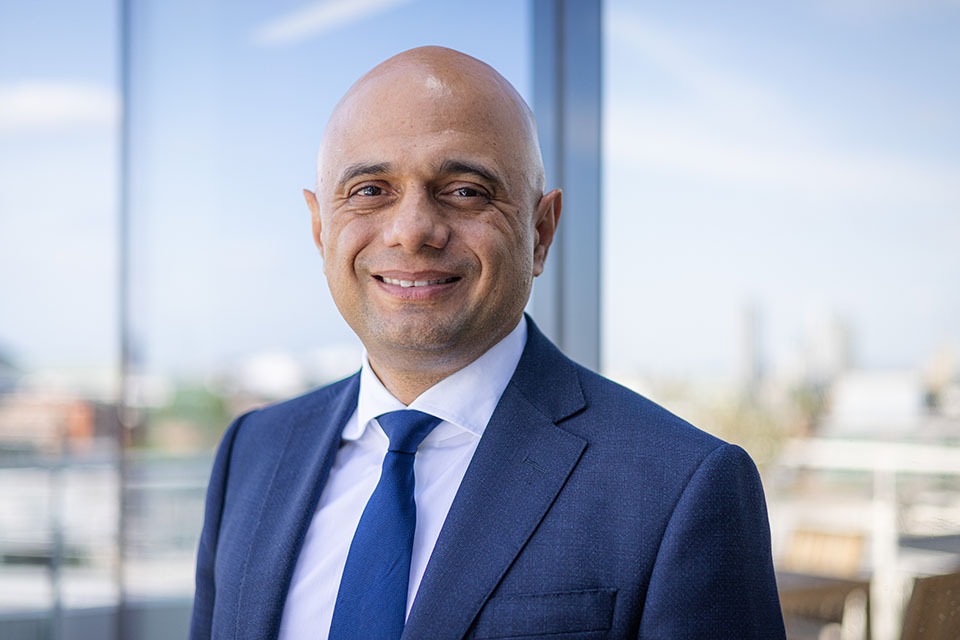
Thank you, Victor [Adebowale]. It’s great to be with you all in person and to be part of the new format. The NHS Confederation has always had an awesome ability to bring people together and this expo is an incredible example of just that.
The last time I saw a crowd this size was at the Platinum Jubilee. We came together that week to celebrate an institution we’ve all grown up with. And I think these kinds of moments matter because they make us look forward as well as back. Few can match Her Majesty the Queen’s record of sacrifice and service, but the NHS can make a very fair claim. Like the monarchy, its success stems from continually reinventing itself for the times we live in.
In nearly 74 years, the NHS has reigned over the greatest uplift in health in British history. And 50 of those years were spent safely in Conservative hands. I’m so proud to be the latest custodian of our health and social care system, working in partnership with Amanda, who – I think you’ll agree – has been a real force for good.
Later this month, I’ll mark my first year in the job. It’s just the blink of an eye when you consider our history, but it’s been a remarkable year – our roadmap to recovery; Omicron, and our fightback against it; and our COVID-19 elective recovery plan. There have been so many unprecedented achievements of which you should be fiercely proud.
In just a short time, I’ve experienced more highs and lows than in any other job – and I’ve had a few!
Highs – like how we rose to meet the challenge of Omicron. Highs – like the way so many of you moved mountains to run a remarkable booster campaign. Highs – like how the social care workforce helped to safely open care homes so family members could visit again.
But the lows have been profound too. Like receiving Donna Ockenden’s report on maternity failings in Shrewsbury and Telford. Like meeting heartbroken families, bereaved by painfully similar tragedies in Nottingham. Or learning of the allegations about the North East Ambulance Service.
My experiences of health and care are like so many people’s across the country. We’ve all borne witness to phenomenal bravery and dedication, all while knowing things still need to get much, much better.
It is possible to love the NHS and still demand change. There’s no contradiction there.
Like most of us, I watched that recent video from the A&E at Princess Alexandra Hospital in Harlow with a mixture of emotions. Horror, at the thought of how would I feel if it was me in that room? Or one of my children? But also respect. Respect for the colleague who had to deliver that difficult message and her poise in the face of unimaginable pressure.
We all know that people working in health and care have one of the most difficult jobs in Britain today. So to her, and to everyone else working in health and care, I want to thank you for everything you’re doing in such difficult circumstances.
And I’m under no illusion about the challenges we face.
Our COVID-19 recovery plan is ramping up to deliver a huge increase in activity, embedding new ways of working. Our new community diagnostics centres are bringing life-saving tests, checks and scans closer to people’s homes. It’s a vast effort of which we should all be enormously proud.
Yet the scale of the challenge is equally vast. We know that some 11 to 13 million people stayed away from the NHS because of the pandemic. Many of those people are now rightly coming forward – and many of them to A&E.
Omicron was also a setback, with an additional 16,000 COVID-positive people in hospitals. And we know the number of people on waiting lists is continuing to rise.
Not only that, but the COVID-19 backlog sits atop a broader set of generational challenges.
Improved life expectancy is one of the great triumphs of the modern age, and in so many ways an NHS triumph. But it also comes with its own challenges.
The Resolution Foundation has projected that this decade is likely to see the fastest pace of ageing in any decade from the 1960s to the 2040s. As our population gets older, more and more people are living with increasingly complex long-term conditions. Treating an 80-year-old is around 4 times more expensive than treating a 50-year-old.
At the start of this century, in 2000, health spending represented around 27% of day-to-day public service spending. By 2024, that figure is set to rise to 44%.
This government will always make sure our health and care system has what it needs to face the future with confidence. We’ve put in record levels of funding in recent years, including raising billions more through the new Health and Social Care Levy.
But funding will only ever be part of the answer. Growing health spending at double the rate of economic growth over the next decade, as I’ve heard some propose, is neither sustainable, desirable, nor necessary.
I don’t want anyone’s children to grow up in a country where more than half of our national budget is taken up by healthcare, at the expense of everything from housing to education. That’s not a fair deal for the British people – particularly young people.
Obviously, we face many structural challenges – from an ageing population to multiple long-term conditions. But demanding spending growth of this kind suggests that we will fail to reduce demand through prevention, early diagnosis and more effective care – as well as fail to increase health and care productivity with improved use of capital, skills, management, data and innovative models of care. I refuse to countenance such failures.
I know that – when it comes to improving productivity and quality over the next decade – there’s no one more ambitious than you. Indeed, it’s one of the 4 key objectives which Matthew set out for this conference, which I very much welcome.
When reports came out of Cabinet last week that I’d described the NHS as like “Blockbuster in the age of Netflix”, it caused a bit of a stir. But it’s because I believe in the NHS and its founding principles that I want to focus minds on why some organisations keep pace while others get left behind.
Before entering Parliament, I had the privilege to live and work around the world. I can tell you: the NHS is unique. It’s not there to make a profit – and it never will be.
But it’s also not immune to the same basic choices that face organisations right across the world. We need to be smarter with our capital; digitise and transform our use of data. We need to grow the workforce, improve leadership and management and prevent problems from escalating in the first place. We need to accelerate the development of new, innovative models of care and build a more personalised service in a way that people now come to expect.
Can you imagine any multinational without access to levers like workforce planning? Or any big supermarket chain without a consistent leadership and management programme? Or any FTSE 100 company with its digital functions outside of its own organisation? I believe there are a great many things still to do before we even think about turning to taxpayers again. And it was great to hear what Amanda said just now about making the best use of taxpayers’ money.
What we’ve done
Together with all of you here today, a lot of this work is already under way. Let’s just take a quick look at some of the things we’ve worked on in the last year alone.
We’ve built new institutions, like the UK Health Security Agency (UKHSA) and the Office for Health Improvement and Disparities (OHID) to redefine how we do public health in this country.
We’ve strengthened existing institutions, like NHS England (NHSE), by bringing workforce and digital transformation into the heart of the NHS.
We’ve announced how we’ll improve the provision of social care, something successive governments have ducked for far too long.
We’ve set out ambitious public targets to slash long waits in the coming years through the COVID-19 elective recovery plan, and we’re projected to meet the first of these targets by next month.
We’ve published our integration white paper, a blueprint for how we provide better care for patients and better value for taxpayers.
In March, in a speech at the Royal College of Physicians (RCP), I laid out the building blocks for our future around Prevention, Personalisation, Performance and People. I did note Amanda’s ‘4 Rs’ earlier, which I also very much agree with.
On Monday, I announced our new data strategy, called ‘Data saves lives’, to bridge the digital divides between health and social care and ensure we use people’s data safely and responsibly so we can take the public with us on this exciting journey.
And next month the bulk of the new Health and Care Act comes into force, including our statutory integrated care systems (ICSs). It’s certainly not been a quiet first year in the job!
But I’ve been determined we keep moving forward, because this moment in time we dare not lose. It’s a moment when we can combine valuable lessons from the pandemic, with incredible new technology and innovative ways of working, which when taken together help us face the challenges of the future.
It’s a small window of time where we can make a big difference.
Leadership review
For me, an important recent moment was when General Sir Gordon Messenger and Dame Linda Pollard published their landmark review into health and social care leadership.
I remember Gordon saying: “For a report like this to really have an impact… it has to be supportive and honest.” I think we can all agree, that’s what we got. And I’m pleased it has been welcomed by the NHS Confederation, NHS Providers and many more.
I’m so grateful to Gordon and Linda for their work, and I’m pleased to accept their recommendations in full. They found countless examples of great leadership, not just at the top but at all levels. More than that, they found great leadership under considerable stress.
They found that where there’s better leaders, there’s better teams. And where there’s better teams, there’s better outcomes. I’ve seen this for myself, in countless visits around the country, including this morning on my visit to the Royal Liverpool University Hospital.
But this kind of exceptional leadership isn’t embedded everywhere. The review had some really important insights.
First, on collaboration. We know that for years people have worked tirelessly to do the right things for patients – doing their best to work across the walls that have kept us apart. The walls between health and care. The walls between neighbouring trusts. The walls between one organisation and another.
We’ve chipped away at these walls for a while now. And through the pandemic we sent whole sections crumbling down – for instance, the incredible way that we rolled out the vaccine, the incredible job the NHS did. No one wants the walls to go back up, so now we’re bringing more and more walls down. From the changes to NHSE to the new integrated care boards, colleagues can collaborate as never before.
Implementing the recommendations of the review will support more collaborative leadership: one where we’re working across the divides where the walls once stood and embracing a ‘connection culture’.
I was also moved by the insights on culture in the workplace. They found “too many reports to ignore” of poor behaviour and that we’ve reached a point where – in some parts of the system – bullying and discrimination are, and I quote, “almost normalised”. All of us know, from our own careers, just how toxic that can be. Because when even just a tiny minority behave that way it can be contagious for behaviour and morale.
We will have zero-tolerance on discrimination, bullying and blame cultures. And that of course includes racism – which was highlighted by the British Medical Association’s report yesterday.
We know that, if we tolerate it, it doesn’t just make health and care a worse place to work, it makes this country a worse place to live. The examples of Shrewsbury and Telford and Mid Staffordshire show the extremes where this behaviour can take us. Standards not met. Complaints ignored. Lives needlessly lost.
Let me be clear: the actions of the few should take nothing away from the values of the many. In fact, it’s because of the incredible professionalism of the overwhelming majority of colleagues in health and care that we should be even more determined to get it right.
And the good news is this: just as Gordon and Linda found that bad behaviour was contagious, they found that great leadership was contagious too. It works best when everyone – even those without the word ‘leader’ in their job title – feels like a leader.
Other recommendations around training, standards and management will support this effort, helping the workforce at all levels by creating the conditions for everyone to thrive.
And when I say everyone, I mean everyone everywhere. Not just those in leafy pockets of England, but where people need it most.
We know that in some regions poor leadership is a constant challenge. That’s an injustice we’re just not prepared to tolerate. We need the best people doing the hardest jobs – and getting the right leaders in the right places takes the right incentives.
One of the first things I did in this job was to read Sir Chris Whitty’s report on the serious health and social challenges in coastal communities. And I’ve seen them first-hand. I did my first speech in Blackpool on health disparities. And I was recently in Clacton as part of my Road to Recovery tour, where they have the second highest mental health need of anywhere in the country. So I’ll make no apologies for encouraging top talent to areas facing the biggest problems, especially some of our most deprived communities.
I’m committed to making these changes: to supporting the leadership our colleagues in the NHS and social care deserve – and the leadership everyone everywhere deserves.
What’s to come
The year ahead promises to be no less busy. We’ll shortly be publishing: our digital health and care plan; our health disparities white paper; our 10-year plans on cancer, dementia and mental health; our update of the NHS long-term plan after COVID; the Health Education England workforce framework which, later in the year, will be followed by the NHS’s first-ever 15-year workforce strategy.
I also recognise that primary care is going to be a crucial part of the puzzle. It’s the front door to health and care – and I’m grateful to all the primary care staff who make a difference every single day.
But I don’t think our current model of primary care is working. That won’t be a surprise to you. I know. You know. Patients know. And everyone working in primary care knows: we need a plan for change.
We are starting with pharmacy – and I will be setting out my plans shortly.
I’m grateful to Dr Claire Fuller for her recent review on how we can improve patient access to primary care. I’m confident her recommendations will improve access, including for those with the most complex needs, and, ultimately, help us tackle the COVID backlog and help people live healthier lives for longer.
I’m determined that when we look back on these years – on this window of change we have right now – that we can say we did all we could to secure the future of health and care for the generations that come after as.
Reform partnerships
So today I want to focus on one more thing our new Health and Care Act can help us achieve.
The pressure of the pandemic produced some powerful partnerships. With the ingenuity of people on the front line, including so many of you, walls that had seemed so rigid came crumbling down. As we face the challenges of recovery, those ways of working can work again.
Back at the RCP in March, I talked about the potential power of ‘partnerships for reform’. Now, we have a legislative framework that encourages it. For ICSs to fulfil their full potential – and make the changes truly worthwhile – I want to see the creation of many more of these reform partnerships.
This is already happening. We’ve already taken forward the provider collaborative model where a group of providers of acute or mental health services agree to work together to improve the care pathway of their local population.
For example, there are currently 47 NHS-led provider collaboratives for mental health, learning disabilities and autism. We’ve seen the success of this approach in London, where the South London Health and Community Partnership has been able to bring out-of-area patients down by a third, and readmissions down by two-thirds.
There are also some 50 acute trust collaboratives and mixed collaboratives, bringing together acute, specialist, mental health and community providers. It’s about listening to the innovators already doing incredible things within the system – then giving them a platform to do it.
They’ve already shown that when we partner like this, challenges that appear intractable in one place can be resolved in another. These partnerships work. They deliver for patients. And they’re helping us to tackle the COVID backlog.
So for me, the logical next step is to think about how we can use these kinds of partnerships to support underperforming trusts.
Earlier I talked about using incentives to get the right leaders in the right places – places that have been let down for too long.
Reform partnerships will be a central way we can spread good leadership to those places. So as part of the work on reform partnerships, I want to explore whether we make being part of a reform partnership a requirement for underperforming trusts.
I believe this could be a powerful way to ensure that the leadership we need doesn’t stay in the walled gardens of England’s best performing trusts, but is there to help turn trusts round, and with it the health and happiness of those who live there.
So I’m looking forward to working with all of you on these plans.
I know you’ve faced – and continue to face – the most unimaginable kinds of pressures. And you continue to do so with passion and innovation.
You have not just my admiration, but my full support. I’m proud to work with you and call you my colleagues. Because if there’s a theme that unites all of this work, it’s this: that the ideas and the ways of working we need are already here – with so many of you in the room today.
I believe we can continue to reinvent ourselves for the times we live in, for this institution we’ve all grown up with to be the one we grow old with – with dignity and with good health.
And the moment to do it is now. We have no time to lose. We have a small window of time to make a very big difference.
Let’s keep breaking down the walls between us, to meet the challenges before us, so that together we can deliver better health and care for everyone everywhere.
Thank you all very much.