Publishing: a British comparative advantage
Graham Stuart speaks at the Publishers Association on the industry's value to UK trade, the Export Strategy, and trade policy beyond the Customs Union.
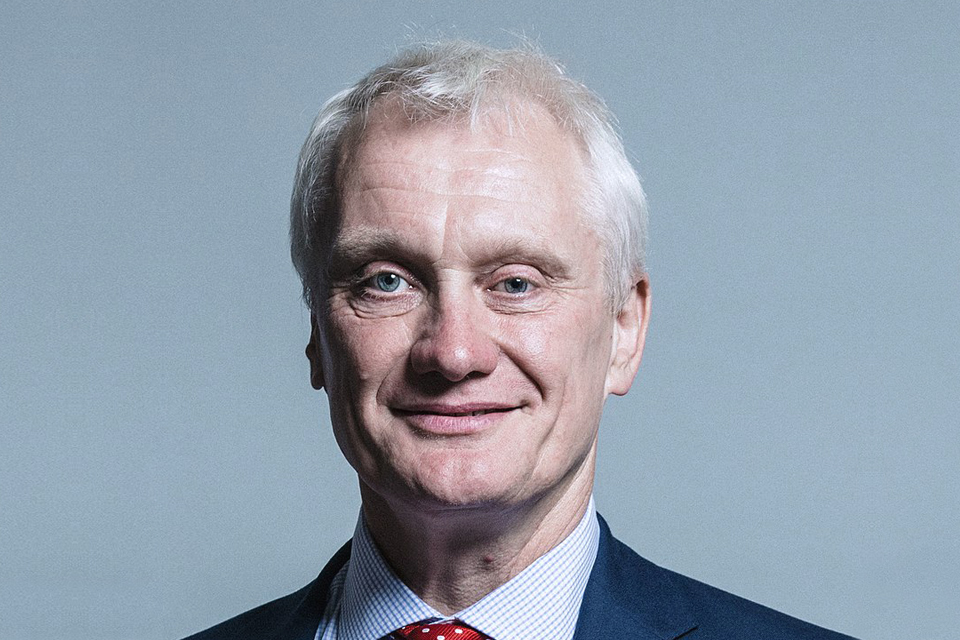
It’s been more than 30 years since I started my first publishing business: writing, editing and publishing a local ‘what’s on’ guide, based in my university digs, when I was supposed to be studying for my degree. And I must say – time well spent.
I’m sure a lot’s changed since then – you’ll know better than me! But I’m really pleased to see our industry going from strength to strength.
And that’s not just a personal thing. Trade is a real priority for this government: for the first time in this country’s history, we’ve got a department solely devoted to increasing our international trade.
Don’t forget that Brexit cuts across hundreds of policy areas: but only one of them got a brand new, permanent department. One need only glance at the papers to see how far trade has moved up the political agenda.
It is right that it is a priority – trade and investment matter to our economy. We exported well over £600 billion last year; we’re now the world’s fourth largest exporting nation, after overtaking France and Japan; we’ve got £2.4 trillion of British money invested abroad or foreign money invested here.
The government wants to build on that, which is why we’re creating a new Export Strategy – led by Rona Fairhead, who also used to work in publishing, and I believe talked at your event at the London Book Fair in March.
The UK’s comparative advantage in publishing
Trade is all about playing to your strengths: it’s called comparative advantage for a reason.
And publishing is an area of strength for Britain.
Our language is an advantage. Speaking the world’s language is naturally going to help us publish to the world.
Our researchers are an advantage. There’s a reason why we’re home to 10% of the world’s academic publishers, with £1.1 billion of international revenue.
It’s because we have one of the world’s best science bases, and some of the best universities: according to Times Higher Education, for 7 years in a row the 10 highest-rated universities, as ranked by fellow academics, were all in either the UK or the US.
That’s something the government wants to support further: in the Industrial Strategy we committed to increasing R&D spending to 3% of GDP, which would put us in the top quartile of OECD countries.
Our intellectual property regime is an advantage. Your work is world-class. But you need to get paid for it.
Fortunately, Britain boasts one of the world’s most robust intellectual property regimes, and the Creative Industries Sector Deal included £2 million to educate consumers on the value of copyright.
And – let’s not underestimate this – there’s the cultural factor. Publishers know how to export, because you already export a lot – I believe 57% of your revenues come from exporting, which is impressive.
So when it comes to exporting, you start from a strong position – and the government is helping secure that position.
Government help for publishing exports
But this isn’t just about setting the right background conditions. The government is also committed to directly helping you export.
Over the past 4 years, the Department for International Trade and its predecessors have had a significant presence at the annual London Book Fair, including meetings with targeted buyers from China, India, South Korea, Indonesia, Thailand, USA and the UAE.
And our Tradeshow Access Programme is helping UK publishers to attend other major international trade fairs.
This year, from April 2018 to March 2019, there will be UK groups, managed by the Publishers’ Association, at the Bologna Children’s Book Fair, the Shanghai International Children’s Book Fair, the New York Rights Fair, the Beijing International Book Fair and the Frankfurt Book Fair.
And you’ll be helped by our efforts to promote exporting more widely.
The Export Strategy
I can’t give you every detail on the Export Strategy – like any good book, you’ll have to wait until it comes out.
But let me give you some teasers – or spoilers, if you like – and a flavour of what we’re already doing.
We will put finance at the heart of our offer: UK Export Finance, the world’s oldest export credit agency, can provide insurance or credit to help you export. It can now already provide over £50 billion in support, in over 60 different currencies.
As part of our export strategy, we’ll be doing a full review of the UK Export Finance product suite.
We’ll be encouraging the uptake of Export Finance support – too many people don’t know about it. And we’ll be especially focussing on SME’s and on companies down the supply chain – those who don’t export themselves, but who supply to companies that do.
And finance is far from the end. We’ll be making sure that companies have the right practical and promotional support, too – this is a comprehensive strategy, using all the tools at our disposal.
People often think of the Department for International Trade as a purely ‘Brexit department’.
Well, aside from UK Export Finance, which is nearly 100 years old in one form or another, we have a network of trade advisers in 108 countries across the world.
So if any of you are looking at expanding into a new market: my department can give you the local knowledge you need, connecting you with local opportunities and helping you understand local business practices.
Our Export Strategy is also going to stick to some important principles.
One of these is that it must be for business, and led by business.
Another is what we call ‘no wrong door’ principle. Government can be complex – sometimes that’s unavoidable. But that doesn’t mean dealing with us should be complex.
The support you get should be seamless – you shouldn’t have to understand our internal structure to work with us, anymore than you’d expect that of your own customers.
Future trade policy
Now, the Export Strategy does not exhaust our trade policy. There is, of course, the small matter of Brexit and of trade agreements outside the Customs Union.
Let me say first that we will be transitioning the EU’s existing free trade agreements, and that we’re taking through the House of Commons right now a Trade Bill that will give us the powers we need to do that.
But we will also be looking to sign new trade agreements. That is one of the great opportunities we will have, once we have left the Customs Union: the IMF estimates that 90% of global growth in the next 10 to 15 years is going to come from outside the EU.
We are currently barred from negotiating trade agreements under the EU duty of sincere cooperation. But we are laying the ground – and the signs have been positive.
As you’d expect, we take a holistic approach to prioritising them, and it requires judgment – there’s no algorithm. But we take into account things like the size of the economy, how easily we could reach an agreement, and how compatible our economies are.
We have set up working groups covering 21 countries, and myself and other ministers in my department have made over 160 overseas visits.
And we’ve had a good reception. To quote the Prime Minister of New Zealand: “We are here, ready and waiting…when you are ready we are.”
I know the US is one of your biggest markets. Well, here’s US Treasury Secretary, Steven Mnuchin: “As soon as the UK is ready we will be prepared to negotiate an attractive trade deal”.
You can’t put it clearer than that.
So, I do think we will get trade agreements that will allow us to maintain and extend your overseas markets. But before I finish, I’d like to emphasise how important it is for me to hear from you and what you have to say. There’s a reason why a key principle of the Export Strategy is designing it around the needs of business – it’s because the Department for International Trade exists, ultimately, for you.
The government doesn’t trade, businesses trade – my job is simply to facilitate you trading, and I can only do that effectively if I know the barriers you face.