Secretary of State's address to the NHS Providers Conference
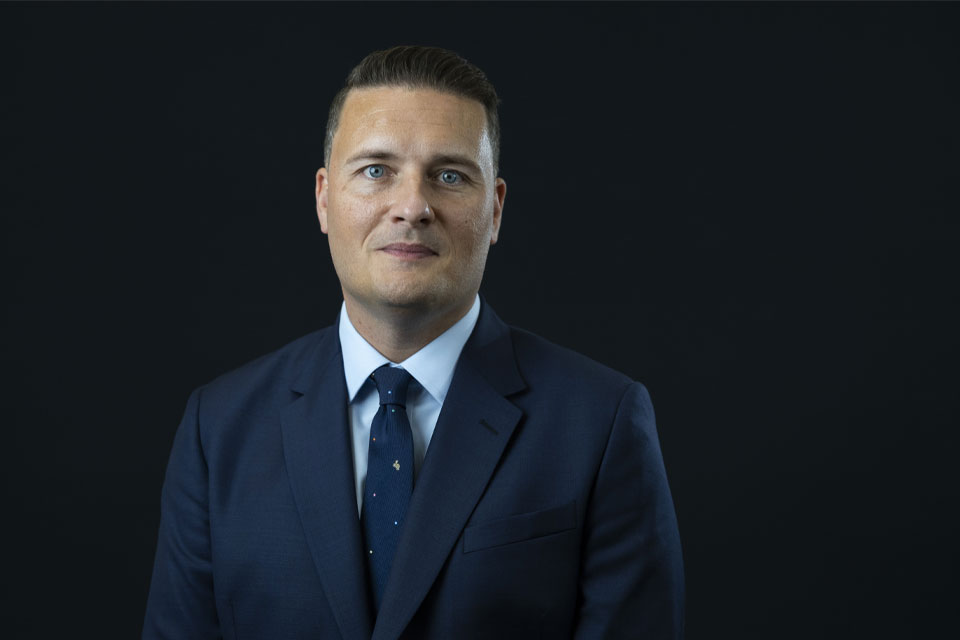
Wes Streeting, Secretary of State for Health and Social Care, addressed the NHS Providers Conference in Manchester to talk about the next steps for reforming the NHS.
Thanks so much for that introduction, and thanks to all of you for being here. Ā
Iā€™m delighted to be here given the - or to give the announcement that everyoneā€™s been talking about in the news today. That is the governmentā€™s reforms to NHS system architecture. Ā
[political content removed]
It is a relief actually, but genuinely great to be here with all of you today. Ā
And Iā€™m really grateful, Daniel, for the leadership you and NHS Providers is showing at such a challenging time. But before I get into the challenges, let me just start with the positives. Because right now, weā€™re achieving things in the NHS weā€™ve not seen for a long, long time and I know itā€™s not been easy. Iā€™ve made considerable demands on you. And willĀ continue to do so. But youā€™ve shown over the last year or so that while the NHS was broken, it wasnā€™t beaten.Ģż
You provided 5 million more elective appointments, 135,000 more cancer diagnoses within the 28-day target, and cut waiting lists by over 200,000. Ambulance response times and 12-hour waits in A&EĀ are down. There are 2 and a half thousand more GPs. In fact, we now have the highest number of GPs on record.Ģż
Youā€™ve opened over 100 community diagnostic centres at evenings and weekends - new surgical hubs to bust the backlog - the extra doctors, nurses and mental health staff we need to treat patients on time - and together we built the 10-year plan for health to create the truly modern health service that weā€™re all crying out for.Ģż
These are the green shoots of recovery that are beginning to renew confidence and restore faith in our National Health Service for both patients and for our staff. Our investment and modernisation are paying off. And with it, ambition and optimism are returning. Itā€™s why I can come here today and say, with credibility, that we can still cut waiting times to 18 weeks by the end of this Parliament.Ģż
Something few thought possible when we made the commitment in opposition. And while we can do it, and we can do it while delivering year-on-year improvements to urgent and emergency care, we can get back to seeing people within 4 hours and while rebuilding general practice, so that patients can get an appointment with their doctor when they need one.Ģż
So, I want to begin by saying to all of you genuinely, thank you. Thereā€™s sometimes a perception out there that Iā€™m going to have to really battle this system and all of you to modernise, and itā€™s such a misrepresentation of the leaders I work with. NHS leaders and frontline staff are not only chomping at the bit for change, youā€™re the ones showing the world that it can be delivered.
Thereā€™s a real can-do culture back in the NHS, but - and itā€™s a big but - there is also a great deal of jeopardy out there from economic constraints, winter pressures, industrial action. And the political forces willing us all to fail.Ģż
So thereā€™s a lot of pressure on our shoulders, because we all know how important the NHS is to our country. How central it is to the lives of every family in this land. And how strongly we believe in the values that have underpinned it since 1948 - values that are becoming increasingly contested.Ģż
So, itā€™s important I think for us to keep in mind the consequences, if we get this wrong. Millions are counting on us and thereā€™s much, much more to do, so this isnā€™t the moment to ease off the gas. This is the moment to push our foot harder on the accelerator.Ģż
One reason why we see renewed confidence is the rigid focus youā€™ve brought to reducing waste and increasing productivity while improving services at the same time. In fact, reducing waste and increasing productivity are essential to improving patient services and staff experience. Ā
This government is investing an extra Ā£26 billion in the NHS this year.Ģż
We continue to be relative winners of budgets and spending reviews. Although you and I know what the word ā€˜relativeā€™ means, which is why Iā€™m always relatively happy at how we do at budget time. And we owe it to patients, to staff and to taxpayers to make sure that every penny thatā€™s going into this service is money well spent.Ģż
Thatā€™s why Iā€™m really proud that for the first time in years, the NHS is in balance, 7 months into the financial year. Itā€™s not going to be easy to stay on track for the rest of this year, especially with the double whammy of strikes and winter to come.Ģż
But breaking even is a huge shift from the Ā£6.6 billion deficit we were looking at.
There are people out there saying that universal health care, free at the point of need, is no longer affordable or possible. And everyone in this room and beyond is proving them wrong. Ā
So this isnā€™t just a technocratic accounting triumph. It is the foundation of everything else because itā€™s ultimately what will allow us to invest again in staff technology and services, all of which add up to better patient experience. It also gives me, butĀ all of us, credibility with the Chancellor. The government inherited public finances with a Ā£22 billion black hole.Ģż
And it wonā€™t have escaped your notice that the public finances and the wider economy are still under serious strain. So, there is no money to waste and I think that itā€™s really important that we accept with some humility that one of the reasons the Chancellor is having to make some unpopular choices is to protect investment in the NHS.Ģż
This government will always put our public services and our NHS first. But the investment this government is making in the NHS also comes with a moral duty for us as NHS leaders, because every penny that goes into treating the sickness in our society is a penny that could have been spent on tackling the wider social determinants of health, much of which sits outside the NHS.Ģż
On prevention rather than cure.
Of course when I say savings, it sounds very benign. In reality, I do want to take this opportunity to acknowledge that this has been particularly hard for ICBs. Iā€™ve asked a lot of you this year. Last year, I said that ICBs will have a more focused purpose, as strategic commissioners. Theyā€™re the drivers of the transformation from a National Health Service to a neighbourhood health service and a preventative health service.Ģż
Given that focus brief, weā€™re asking ICBs to downsize significantly. Ā
Having seen redundancies in organisations Iā€™ve worked in previously, I want you to know, I do not take this lightly. I know this will have been weighing heavily on all of you and the people who work for you, and I certainly donā€™t want ICBĀ leaders to take the flag for decisions and timetables on head count that are ultimately my responsibility.Ģż
Iā€™m very alive to the uncertainty thatā€™s hung over staff for far too long. And I donā€™t mind saying, itā€™s made me uncomfortable, as it should. Because I know weā€™re not just talking about jobs, weā€™re talking about peopleā€™s livelihoods. And again that is my responsibility. Not yours. I want to be honest with you, and through you to your staff, that I have not resolved this quickly enough.Ģż
But this is worth doing and we can now bring certainty to people. From today Iā€™m giving ICBs the go ahead and the funding for the voluntary redundancy programs that staff have been waiting for. This will see overall head count cut by 50 percent which will particularly, not exclusively, but particularly, affect roles in corporate services, communications and administration.Ģż
Alongside this, weā€™re moving ahead with the abolition of NHS England and weā€™ll complete it to the timetable the Prime Minister announced in March. Head count across my department and NHS England will also be halved, returning to the size we had in 2010, when the NHS delivered the shortest waiting times and highest patient satisfaction in history. This move will free up more than a billion pounds a year, which will be reinvested in frontline care.Ģż
To anyone listening at home - and who knows, someone might be listening at home - I want to reassure you that our investment is not simply pouring more water into a leaky bucket. Weā€™re plugging the holes, cutting out the waste and rebuilding our National Health Service. And to those of you here today, and hopefully youā€™re listening.Ģż
We arenā€™t simply changing staff numbers. We are ending the constant assurance, ad hoc demands and micromanagement that youā€™ve been subjected to. The centre will instead enable you to focus on improving services for patients. A new department that empowers rather than suffocates NHS leaders and frontline staff. And I have to say, the way in which leaders across the service are responding to the scale of the challenge Iā€™ve placed on you has been extremely and genuinely impressive. Ā
Weā€™ve seen an uptick in flu jabs, among staff and the public, weā€™ve stress tested plans much earlier, weā€™re investing in new ambulances, building new urgent treatment centres and introducing new mental health crisis centres.Ģż
Online access to GP practices should stem the tide of the 4 million patients who go to A&E each year because they canā€™t get through to their local surgery. So thank you to all of those GPs who have successfully introduced this new system. Youā€™ll be crucial in unclogging emergency departments, freeing up beds and saving lives this winter. Ā
And on the social care side, weā€™re working more closely with local authorities to ensure people get the care and support they need at home rather than languishing in hospital beds. But we know that the NHS is already running hot. A&E and ambulance demand is already higher than it was in 2024.Ģż
Flu is coming earlier and there is a particularly nasty strain this season. Those are the challenges we have to rise to for many patients who come through our doors. This winter it will be the one time in the entire year when they experience the NHS. What impression do we want them to leave with?Ā
Do you want to be just about managing? That canā€™t be our benchmark. We canā€™t accept the winter crisis as an annual event like the John Lewis Christmas ad. We have to improve year on year. And of course, with all these challenges, the last thing patients need this winter is strike action by the BMA.Ģż
I was really proud of the way that NHS leaders and frontline staff pulled together to get through the last round of resident doctor strikes. Ā
We saw an additional 11,000 procedures going ahead compared with the June 2024 walk out. We managed to keep the costs of industrial action down to the tune of a hundred million pounds less than the previous round.Ģż
And despite the busiest July on record for A&E, this was the highest proportion of patients seen within 4 hours in 4 years. I think that is a considerable achievement. And I want all of you to know that it wasnā€™t lost on me how hard you all worked to keep the show on the road.Ģż
But the truth is that strikes do have unavoidable and serious consequences, particularly when theyā€™re called during winter. That is why I made a comprehensive offer to the BMA last week in a final attempt to prevent strike action - coming on top of a 28.9 per cent pay rise which they have already received from this government.Ģż
I would have thought that the offer to go even further with extra jobs prioritisation and money back in their pockets would have demonstrated how serious this government is about improving resident doctors lives and career prospects. Yet the BMA rejected the offer out of hand, refusing to even put it to their members.Ģż
If strikes do go ahead, this will cost around Ā£240 million and we will not be able to afford the same offer again, so my message to BMA is simple: postpone the strikes, trust your members and give resident doctors a say. Patients, doctors and the wider NHS staff all lose if strikes go ahead. And there is still time for everyone to win.
That brings me to a broader point about choices and trade-offs. When we pull together, and when we mobilise behind the ideas in the 10 Year Health Plan, we can deliver year-on-year improvement, change and transformation that gets the NHS back on its feet and fit for the future. Where parts of our team fail to recognise that we canā€™t solve everything, for everyone, everywhere, all at once, thatā€™s when we run into difficulties. Ā
Thatā€™s what makes our collective job much harder. And I know Iā€™m preaching to the choir in this room because, as leaders, there are choices and trade-offs that you face every day, and itā€™s really important that we continue to work together to face those choices and trade-offs in an honest way.Ģż
Because the progress of the last 18 months tells a bigger story, one of a service beginning to believe in itself again. Thatā€™s quite something given the horrendous state of neglect the NHS was in after 14 years of under investment and mismanagement. And we have to be honest that some of what weā€™re doing has never been tried before. Success wonā€™t happen overnight. Ā
We - I - will make some mistakes along the way. That is all part of learning and improving. But together weā€™ve begun restoring confidence, weā€™ve built strong foundations for real improvements. Weā€™ve moved from barely scraping by to having real hope and big ambitions.Ģż
I said thereā€™d be fewer targets and less bureaucracy, and there are. I said thereā€™d be no more short-termism, and we now have multi-year funding settlements to give you the certainty you need. I said the centre would be smaller, and it will be. I said the power would be handed back to patients, professionals and providers, and it is being. All of this is why weā€™re here today in a position to declare that the NHS is on the road to recovery.Ģż
And at the heart of that revival is our 10-year plan for health. It sets out how weā€™ll transform the service of today into an NHS fit for the future. Our 3 big shifts will create a new model of care that not only catches up with the rest of the pack, but leads the world.Ģż
The plan breaks with the fiction that you can run a health service, one and a half million staff who deliver 600 million patient interactions every single day, from an office building in Whitehall. The new care model is backed by a new operating model, anchored in clear and consistent principles - power and resources should flow to local providers, frontline staff, and ultimately be placed in the hands of patients. Ā
Autonomy should be earned by meeting public expectations - delivering high-quality care with excellent financial oversight through world-class leadership. Good performance should be incentivised and rewarded. Poor performance should be held rigorously to account. And transparency and choice are essential, not nice to have. Thatā€™s what lay behind our decision to publish new NHS league tables.Ģż
I know there was a concern when I announced them last year that this would be about naming and shaming, and good old-fashioned manager bashing. I hope you can see now that this is actually about confronting the challenges we all face with grown-up honesty. Ā
I was delighted for example with the way the Queen Elizabeth Hospital in Kings Lynn, a hospital which is literally being propped up on stilts, responded to being bottom of the table. Ā
Let me just share with you what the Executive Managing Director, Chris Bown, said. He said, and I quote, ā€œThe issues about our waiting times in our emergency department being too long, ourĀ waiting times for cancer care and elective care being too long, and our financial situation, are not attributed directly to the state of the building. There are things we must do within this building to improve the experience of patients and staff.ā€Ā
Now, the reason I highlight that as an example is, he could easily have said, itā€™s all because my hospitalā€™s falling down.Ģż
And I know he could have said that because I recall offering that defence myself on BBC local radio,Ā in his part of the world earlier that day. And in contrast to what I said,Ā what Chris did was offer the warts and all honesty that is the first step on the road to recovery, not making excuses and covering backsides, but actually taking responsibility and showing a determination to improve.Ģż
Even when factors are stacked against you, that is how we turn the NHS around. But even as we let go of the top-down approach of the past, weā€™re not abandoning trusts to their fate. Those at the bottom of the tables will receive more support. At the other end, good performance will be incentivised and rewarded.Ģż
This new culture of openness drives change and builds confidence that the NHS can learn and improve, which is crucial to restoring peopleā€™s faith in the NHS itself. Ā
And today I want to talk about the next steps weā€™re taking on our new operating model. The first step is a real empowerment of primary care and general practice. Already the hard work and innovation of GPs across the country are helping to renew public confidence in the NHS as the reversal of a decade of declining patient satisfaction shows. Ā
And I know itā€™s not easy. The demands of a 21st century population - the demands of ageing and rising health need - have led to unsustainable workloads. Weā€™ve already halved the number of targets in the GP contract and are investing an extra Ā£1.1 billion. But the bright future that general practice deserves will only come through fundamental modernisation.Ģż
Thatā€™s why weā€™re introducing 2 new neighbourhood contracts. A single neighbourhood provider contract for the delivery of enhanced services for patients, through expert multi-disciplinary teams; and a multi-neighbourhood provider contract to lead the neighbourhood health service at scale.
This is taking the best of the NHS to the rest of the NHS. Learning from some of the trailblazing GP federations already doing this. Pooling resources and expertise will deliver better services over larger areas, like frailty or end-of-life care, and deliver a more efficient back office so more of GPsā€™ time is spent with patients. And as neighbourhood health services reduce demand on acutes, new financial flows will see savings return to them, helping to accelerate the left shift. Ā
I should say at this point, just for the avoidance of doubt, because there might be more media attention on this speech than usual, our second step - reinvent the NHS foundation trust model for modern times. Today, weā€™re launching a new generation of foundation trusts called ā€˜advanced foundation trustsā€™. They will be the front runners towards a more autonomous accountable and integrated NHS.Ģż
And I can announce that 8 trusts are in the running for this new status. They come from across the country from Dorset to Northumbria and they are a mix of acute mental health and community trusts. They represent both the best of our NHS and the diversity of the NHS. Those who are successful will have demonstrated that theyā€™re delivering on the publicā€™s priorities. High-quality care for patients, value for money and progress on the left shift.Ģż
Theyā€™ll be the kind of providers who donā€™t need the sense of breathing down their neck or trying to micromanage their finances. Ā
And they will benefit from real and immediate freedoms, including the ability to reinvest surpluses accumulated last year in future capital projects, more operational, autonomy and fewer ad hoc requests from the centre.Ģż
Weā€™ll continue to open new freedoms and deliver greater autonomy for advanced foundation trusts in the coming years. And in 10 yearsā€™ time, we want every trust to have achieved that status.Ģż
Our third step is the creation of integrated healthcare organisations, or IHOs. Advanced foundation trusts will be among the first to take on IHO contracts and hold the whole health budget for a defined population.Ģż
Iā€™ve heard from so many leaders about how hard it can be to invest in prevention because the savings fall in another part of the system. IHOs will reverse this disincentive. If it makes sense to invest in community care to prevent unnecessary hospital admissions, theyā€™ll be rewarded for doing just that. Any trust can become one, not just the big acutes. And so there is no reason, by the way, they couldnā€™t be led by primary care professionals.
In fact, one of the 2 trusts currently under consideration for IHO status is a community trust. And that diversity will continue. If a nurse is best placed to lead a community service, a GP best placed to lead a hospital, or an acute trust best placed to lead neighbourhood health services, well then, thatā€™s what theyā€™ll do. Ā
Because what matters is what delivers for patients. None of this is simply a renaming exercise. However technocratic it might sometimes appear or even feel. Good system architecture is how we bring to life the vision and ambition in the 10-year plan.Ģż
Iā€™m offering that as a reminder to myself as much as anyone else. Weā€™re breaking the NHS out of its short-term cycles, annual plans of emergency, bundles of rolling crises, complex rules, unnecessary targets. Instead, our approach is, and will be, if you deliver for patients, if you manage your finances well, if you innovate, then you will have the space to lead. Ā
Because plans donā€™t deliver change, people do. And this conference is a reminder that confidence comes from good leadership and that good leadership in the NHS has never mattered more. Great NHS leaders listen to staff and patients and turn that listening into action.Ģż
They donā€™t wait for permission to do the right thing. They donā€™t require a diktat from NHS England. Their attitude says we can do better, and we will. The difference now is that the system will support you to unleash your entrepreneurialism, creativity and innovation. All this adds up to a very different kind of NHS.Ģż
It marks a fundamental shift from command and control to collaboration and confidence. And when people feel they are part of a system that learns, listens and leads, confidence returns and confidence is everything. The NHS was built on it. The confidence of a nation that believed in universal healthcare, free at the point of use. The confidence of staff, who knew they were part of something bigger than themselves. What weā€™re doing together is restoring that confidence. The coming years wonā€™t be a walk in the park. There are no magic wands. No silver bullets. Keeping up momentum will require all of the energy and grit and initiative thatā€™s got us heading in the right direction.Ģż
We need to up our elective activity, to hit the ambitious targets the Prime Minister set us. To get people seen as quickly as possible in urgent and emergency care and to keep improving access to GPs, and we need to maintain our firm grip on the finances. Ā
But for the first time in years, the NHS can look forward with confidence rather than back in frustration. Because weā€™ve got a plan thatā€™s not just ambitious and realistic, weā€™ve got a plan that is working. And that is why the NHS is on the road to recovery. Thank you very much.