Wellington College Anzac Day 2019 assembly: Laura Clarke's speech
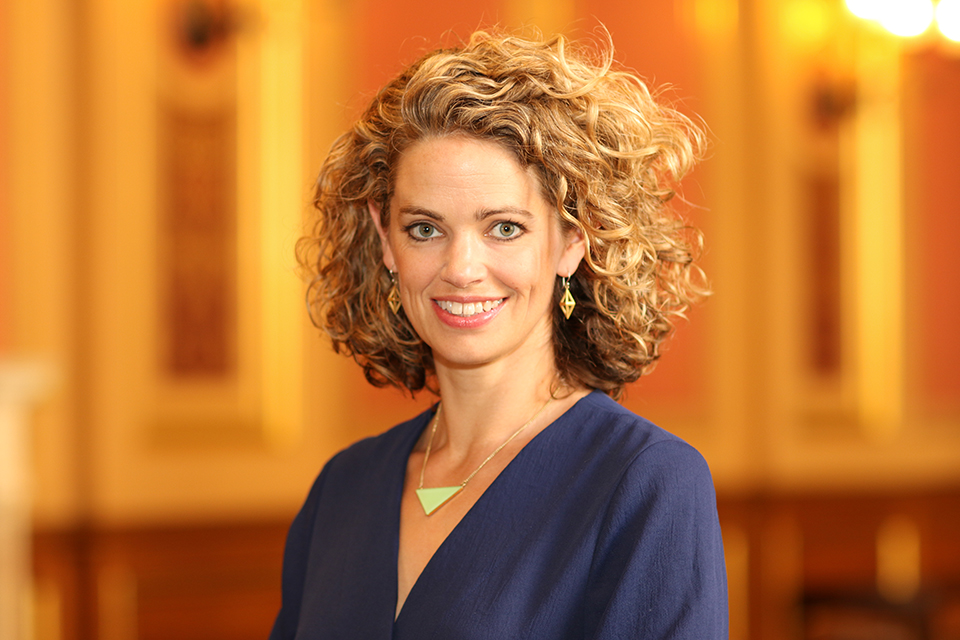
British High Commissioner to New Zealand Laura Clarke reflected on what it took to be a young man in World War 1, compared with being a young man today.
I te hekenga atu o te rā
Tae noa ki te aranga mai i tea ta
Ka maumahara tonu tātou ki a rātou
Āpiti hono, tātai hono
Te hunga mate ki a tātou te hunga ora
Tēna koutou, tēna koutou katoa.
Thank you for inviting me here to address your annual assembly today to acknowledge the 222 Old Boys from Wellington College who died in the First World War.
Later this month, we will mark once again the anniversary of the day when soldiers from the Australia and New Zealand Army Corps, the ANZACs, first landed at Gallipoli, among them, soldiers from Wellington. In doing so we will remember the multiple sacrifices made, and those who did not return, from Anzac Cove and other battlefields, while serving their country.
On the other side of the world from New Zealand, students from another Wellington College, in Berkshire in the UK, also went to war. Wellington college has over 700 deaths on its First World War Roll of Honour, making it one of the schools in the UK with the greatest number of casualties.
It’s hard now, in today’s world, to imagine what it was like for those young men, from Wellington in the UK and Wellington in New Zealand, who joined up, and headed off to war. They would have been young men, students, like you. Leaving home, perhaps for the first time, and travelling halfway around the world to places they had never before seen – except perhaps on a map.
Those were different times. And I want to use my time with you today to reflect on how times have changed in the 100 years since World War 1. To talk about what it was to be a young man in 1915, headed to Gallipoli - about societal structures and expectations of men then, about gender roles.
And then I will travel forward in time – to reflect on how much has changed, and how different it is to be a young man now, versus a young man in World War 1.
World War 1
The world in 1914 was a very different one to the world of today. It was a time when people were much more accepting of hierarchy, of class structures, of gender roles, of ‘knowing their place’. It was a time when people sang that now unpopular verse from All Things Bright and Beautiful, without questioning the assumptions underpinning it: ‘The rich man in his castle/the poor man at the gate/he made them high and lowly/according to their estate…’
It was a time when there was little tolerance for difference – in ethnicity and culture, in religion, in gender, in sexuality. And when there was little space for people to be weak or vulnerable.
Boarding schools, like both Wellington colleges, were tough and austere for a reason. They taught physical strength, discipline, obedience, hardship, emotional self-sufficiency, bravery, a stiff upper lip. They were preparing young men for war. Wellington college even handed out ‘grenade certificates’.
And that was a necessity. Because in those days war was a fact of life, and young men had to be prepared for it. So when war was declared, young men signed up in their hundreds of thousands – without ever questioning it.
Recruitment posters at the time – like the one of a daughter sitting on her father’s lap, saying ‘Daddy, what did YOU do in the Great War?’ suggested that ‘real men’ were those who fought for their families, for king and country – and that those who did not should question their own self-worth. Those who didn’t sign up were presented with white feathers by women – a mark of cowardice, and a clear sign of disapproval: if you didn’t go to war, you weren’t a real man.
So men signed up to do their duty, to serve God, King and Country. There was little questioning of authority. Men were not encouraged to think for themselves – because imagine what that would have meant for orders to go up and over the front? They were to obey without question.
There was also a sense of fatalism. As one soldier quoted in The Scale of the War put it: “This life suits me. It is a man’s life. I wonder if I shall… leave my bones in Europe, but I am in God’s hands, and no death can be better”.
Bravery and a stiff upper lip were paramount. Death was thought better than cowardice or dishonour. As Henare Wepiha Te Wainohu put it - “Pai ake to tatou hinga i te rongo kino ki te ahu whakamuri ki te wa kainga/It would be better for us all to die.. than for a whisper of dishonour to go back home”.
And war was a time of extremes. There was horror, of course. Death, suffering, loss, fear, homesickness, dreaming of an ordinary life. Siegfried Sassoon’s poem - Dreamers, captures it powerfully:
Soldiers are citizens of death’s grey land, Drawing no dividend from time’s to-morrows.
In the great hour of destiny, they stand, Each with his feuds, and jealousies, and sorrows.
Soldiers are sworn to action; they must win
Some flaming, fatal climax with their lives. Soldiers are dreamers; when the guns begin They think of firelit homes, clean beds and wives.I see them in foul dug-outs, gnawed by rats, And in the ruined trenches, lashed with rain,
Dreaming of things they did with balls and bats, And mocked by hopeless longing to regain
Bank-holidays, and picture shows, and spats, And going to the office in the train.
But amidst all the horror, all the longing for home, there was also adventure, adrenaline, camaraderie, team-work, structure and discipline, friendship, a sense of purpose, and a sense of belonging.
Young men were tested in the extreme, they suffered in the extreme: but they also belonged, they knew their role in life.
And when they came home, a whole new struggle began: finding their place in peace-time, finding a sense of belonging. Trying to deal with the trauma of war without the support in place to help them. Trying to rebuild lives with wives and family after so long apart, and having lived in a world of violence.
And now
So let’s talk about now, and the differences between then and now.
The first thing to say is how lucky we are – in New Zealand, and in the UK – that war is no longer a fact of life. That you young men don’t live with the high possibility of being recruited into the war effort. That mothers like me won’t have to send their children off to fight. That peace is the norm.
The second difference is how much more freedom there is now: to think for yourself, to question and challenge authority. To kick against traditional conventions of class or gender roles. To choose your own path and career, to be true to your own sexuality and gender. To be who you want to be – rather than who society expects you to be.
We have gained so much. Take gender roles – an issue close to my heart. Women have fought determinedly for women’s liberation, to be able to work in the public sphere, to be treated equally with men, to have choice. And in many ways women’s liberation is and should be men’s liberation. Men of your grandfathers’ age would have had to be strong, be the sole financial provider and would have had little space or ability to cook, or care for children. Now men have a greater range of choice as women do: they can be more involved in the lives of their kids, they can take on roles in the ‘caring’ professions like nursing that used to be thought of as women’s jobs. They can choose their own path.
But with greater freedom, greater choice, and greater self-determination, comes more complexity. And as the old certainties go, of societal expectations and structure, traditional gender roles, what makes a real man? I think it can be quite hard to chart your way.
And the statistics support that. Statistically, young men in New Zealand have it tough. NZ has the second highest rate of bullying for 15 year olds in OECD countries. Mental health is a huge issue, with New Zealand’s youth suicide rate being the highest in the OECD, and particularly acute amongst young men. And the highest rates of deaths in traffic accidents is of young men.
So the problems are there. But even though we’ve come a long way in terms of breaking down gender norms, we are still living with the legacy of the times when men were hunter-gatherers, warriors, soldiers. And men are still somehow expected to be strong and brave, to ‘man up’, or be ‘ballsy’. And the ‘No. 8 wire / she’ll be right’ mentality is still very much present, as is the rugby-playing model of strong masculinity.
It can feel like there isn’t much space for other sorts of masculinity, or for vulnerability.
But we’re not training warriors any more. Unless something terrible happens and the world changes really dramatically, you are not going to be conscripted. You don’t have to be strong, or brave, or have a stiff upper lip. Nor do I. You can if you want! But it’s also okay to be different. It’s okay not to like rugby, just as it’s okay to love it. It’s okay not to be okay – and it’s okay to ask for help.
Take my son. He’s what my mother calls “built close to the water” – he cries at anything and everything. He is also one of the most empathetic people I know. In the old days we would have had to ‘toughen him up’, ‘make a real man out of him’ – but now we just accept him as he is, and are glad for who he is.
And while being kind, compassionate, caring, emotionally intelligent, loving and vulnerable is still sometimes seen as the domain of women, it absolutely isn’t. Or at least it shouldn’t be. Those are the traits of people – of whatever gender – who succeed socially. Who are good parents and partners, good friends, good colleagues and managers, and good leaders. Look at Jacinda Ardern, and how she leads with vulnerability and emotion. Those are not the traits of female leadership. They are the traits of successful leadership. Using the whole span of emotional intelligence is how you engage people, build a connection, take them with you, get things done.
So, while I hesitate as a 40 year old woman to give advice to young men like you, I’m going to give it a go anyway. And I would say three things:
-
be comfortable in your own skin, be yourself, and don’t try to fit a mould or meet others’ expectations of what you should be
-
be a feminist: because the work is not yet done. Reflect on what it means to be a feminist, and how that should guide your behaviour. Respect women - not just because it’s the right thing to do (which of course it is), but because you will not succeed in life if you don’t
-
and finally: love – in every sense of the word. Build friendship and understanding. Listen, learn, be empathetic. Support those around you, particularly those who are less fortunate, and do what you can to build a better world
And let us today all be thankful, and remember those who fought and died for our freedom, and be grateful that we now live in a world where we can be ourselves with all the complexity and vulnerability that that brings.
We will remember them.
Ka maumahara tonu tātou ki a rātou. Tēna koutou, tēna koutou katoa.