About the Digest and Rural Definitions
Updated 18 March 2025
Applies to England

© Crown copyright 2025
This publication is licensed under the terms of the Open Government Licence v3.0 except where otherwise stated. To view this licence, visit or write to the Information Policy Team, The National Archives, Kew, London TW9 4DU, or email: psi@nationalarchives.gov.uk.
Where we have identified any third party copyright information you will need to obtain permission from the copyright holders concerned.
This publication is available at /government/statistics/about-the-digest-and-rural-definitions/about-the-digest-and-rural-definitions
About the Statistical Digest of Rural England
The Statistical Digest of Rural England (hereafter the Digest) is a collection of statistics on a range of social and economic topics and provides broad comparisons between Rural and Urban areas by settlement type. For more information on our classifications, including maps and diagrams explaining the classification, see below.
Current statistics in the Digest use the 2011 Rural Urban Classification. The 2021 Rural-Urban Classification was released on 6 March 2025. Details of the 2021 Rural Urban Classification can be found at: /government/collections/rural-urban-classification. It will take some time for the Digest to be updated throughout using the new classification. Where relevant, Statistics drawing on the 2021 Census will be added to Digest thematic reports.
The Digest has been restructured into thematic reports and incorporates the previously separate publication the Rural Economic Bulletin.
The Digest consists of the following thematic reports:
- Population
- Housing
- Health and Wellbeing
- Communities and Households
- Connectivity and Accessibility
- Education, Qualifications and Training
- Rural Economic Bulletin
- Energy
All of the content previously found within the Digest has been clustered into sub-themes. There is a lookup table which shows how the new structure maps to the previous publication structure. The Digest will continue to be updated regularly when new material is available. Thematic reports will be updated individually and not every report with be updated every month.
Official Statistics
The statistics within the Digest have been produced to the high professional standards set out in the Code of Practice for Official Statistics, which sets out eight principles including meeting user needs, impartiality and objectivity, integrity, sound methods and assured quality, frankness and accessibility.
More information on the Official Statistics Code of Practice can be found at the page.
This publication has been compiled by the Rural Statistics Team within the Rural and Place Team in Defra:
Stephen Hall
Sarah Harriss
Beth Kerwin
Martin Fowell
rural.statistics@defra.gov.uk
There is a 2011 Census version of the Digest which looks at the data from the 2011 Census and where possible makes comparisons to the 2001 Census results.
This can be found at /government/statistics/2011-census-results-for-rural-england.
Defining Rural areas
Wherever possible, the Rural-Urban Classification is used to distinguish Rural and Urban areas. The Classification defines areas as Rural if they fall outside of settlements with more than 10,000 resident population.
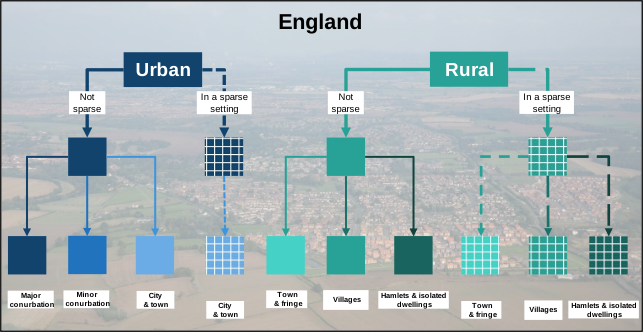
Census Output Areas are the smallest areas for which data are available from Censuses. These Census Output Areas are assigned to one of four Urban or six Rural categories (Figure X-1) based on dwelling densities. Those described as “in a sparse setting� reflect where the wider area is sparsely populated (again based on dwelling densities). From Census Output Areas, other small area geographies can be classified based on how they map to Census Output Areas (such as Lower Super Output Areas (LSOAs), Wards, and postcodes – Note 1)
Figure X-1: Classifying Rural and Urban areas for small geographical areas
A map showing the distribution of the Rural and Urban Census Output Areas is shown in Figure X-2.
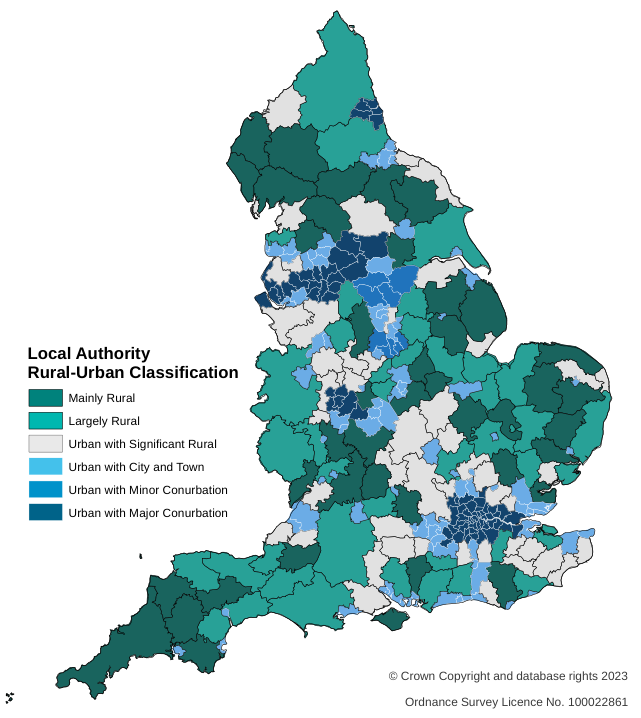
When data are not available at a small geographical scale, it may be possible to apply the Rural Urban Local Authority Classification or a similar classification for other larger geographies. This classification categorises districts and unitary authorities on a six-point scale from Rural to Urban. It is underpinned by Rural and Urban populations as defined by the Census Output Area Classification. A map of the geographical distribution of the Rural and Urban Local Authorities is shown in Figure X-3.
However, the Local Authority Classification also considers some Urban areas as Hub Towns (with populations of between 10,000 and 30,000). These Hub Towns have met statistical criteria (based on dwelling and business premise densities) to be considered hubs for services and businesses for a wider rural hinterland and their populations are therefore classified as effectively Rural for the purposes of determining the classification of the authority.
Figure X-2: Map of the 2011 Rural-Urban Classification for Census Output Areas in England
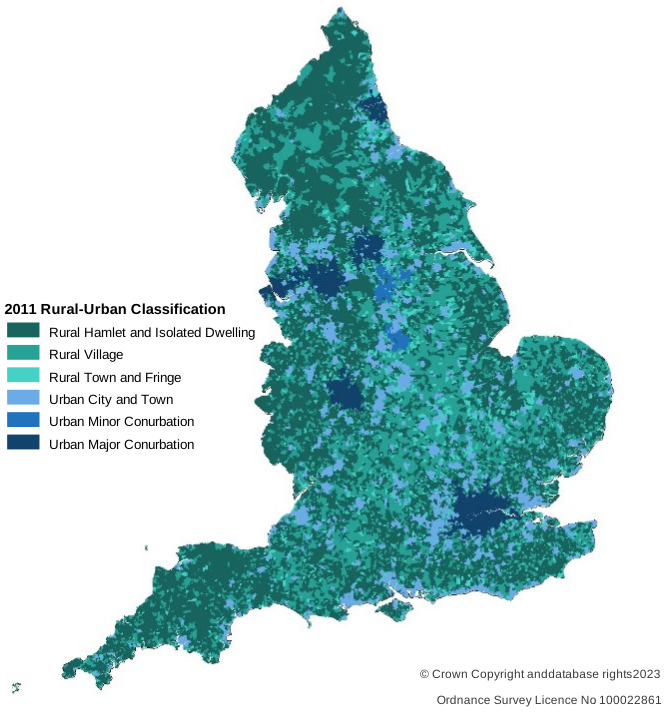
Figure X-3: Map of the 2011 Rural-Urban Classification for Local Authority Districts and Unitary Authorities in England
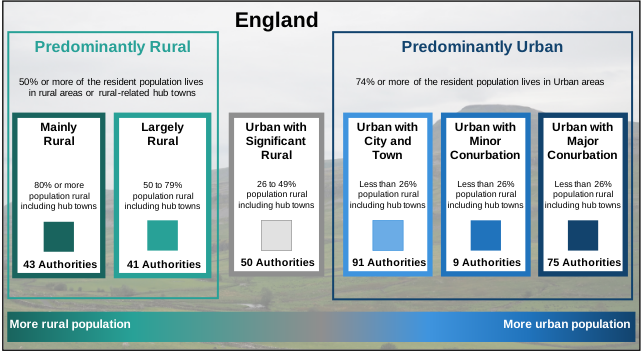
Under the classification, which is shown in Figure X-4, each Local Authority is assigned to one of six categories on the basis of the percentage of the total resident population accounted for by the combined Rural and Hub Town components of its population and its ‘conurbation context’. The Local Authority Classification categories are frequently aggregated to ‘Predominantly Rural’, ‘Urban with Significant Rural’ and ‘Predominantly Urban’ as shown on Figure X-4.
Figure X-4: 2011 Rural-Urban Classification for Local Authority Districts and Unitary Authorities in England
It should be noted that the Local Authority Rural-Urban Classification is based on populations and settlement patterns, not on how much countryside there is. Authorities classified as Urban may have wide areas of countryside and may have sizeable Rural populations. The classification has been made according to the proportions of the population residing in Urban settlements and outside Urban settlements. More information on the classifications can be found at: The Rural-Urban Definition.
Defining Rural areas explanatory notes
-
Note 1: Defining Super Output Areas and Wards
Census Output Areas (OAs) were created for publication of the results of the recent Censuses. They cover around 125 households. In practice few datasets are produced at OA level. However, other larger geographies can be built up from OAs. These include Lower Layer Super Output Areas (LSOAs) which typically contain 5 OAs, so contain approximately 625 households or a population of approximately 1,500 and a minimum 1,000. Their Rural-Urban Classification is based on the majority category of OAs they contain. Some other geographies, for example postcodes are classified based on the location of their central point and the classification of respective OA.
-
Note 2: Accessibility of Figure X-2
We accept that this map might not be accessible for all users, but it is difficult to develop a map containing six colours that will provide enough contrast between all colours to enable every user to see them, especially when the shaded areas are small. Separate maps (showing only three levels of shading) for Rural and Urban areas are available on request from: rural.statistics@defra.gov.uk
Eight new thematic reports
1. Population
ÌýÌýÌýÌýÌý A. Population level and change
ÌýÌýÌýÌýÌý B. Population age profile
ÌýÌýÌýÌýÌý C. Ethnicity
ÌýÌýÌýÌýÌý D. Internal migration
ÌýÌýÌýÌýÌý E. Local Authority population data
2. Housing
ÌýÌýÌýÌýÌý A. Housing stock: age and type
ÌýÌýÌýÌýÌý B. Housing stock: additions and affordable housing
ÌýÌýÌýÌýÌý C. Housing costs: purchases and rentals
ÌýÌýÌýÌýÌý D. House purchase affordability
ÌýÌýÌýÌýÌý E. Second and empty homes
ÌýÌýÌýÌýÌý F. Homelessness
ÌýÌýÌýÌýÌý G. Land use change for housing
ÌýÌýÌýÌýÌý H. Housing quality
3. Health and Wellbeing
ÌýÌýÌýÌýÌý A. Life expectancy
ÌýÌýÌýÌýÌý B. Wellbeing
ÌýÌýÌýÌýÌý C. NHS Dentistry provision
ÌýÌýÌýÌýÌý D. General Practices
ÌýÌýÌýÌýÌý E. Childcare provision
ÌýÌýÌýÌýÌý F. Loneliness
ÌýÌýÌýÌýÌý G. Volunteering and charity
4. Communities and Households
ÌýÌýÌýÌýÌý A. Deprivation
ÌýÌýÌýÌýÌý B. Poverty due to low income
ÌýÌýÌýÌýÌý C. Household expenditure
ÌýÌýÌýÌýÌý D. Police recorded crime and outcomes
ÌýÌýÌýÌýÌý E. Crime surveys: local police and businesses
ÌýÌýÌýÌýÌý F. Feelings about the local neighbourhood
5. Connectivity and Accessibility
ÌýÌýÌýÌýÌý A. Broadband and mobile
ÌýÌýÌýÌýÌý B. Travel behaviours
ÌýÌýÌýÌýÌý C. Access to personal transport
ÌýÌýÌýÌýÌý D. Access to services
ÌýÌýÌýÌýÌý E. Home working
6. Education, Qualifications and Training
ÌýÌýÌýÌýÌý A. Schools and their workforce
ÌýÌýÌýÌýÌý B. Class sizes
ÌýÌýÌýÌýÌý C. Secondary education attainment
ÌýÌýÌýÌýÌý D. School inspections
ÌýÌýÌýÌýÌý E. Free school meals - eligibility
ÌýÌýÌýÌýÌý F. Alternative and specialist education provision
ÌýÌýÌýÌýÌý G. Progression to higher education
ÌýÌýÌýÌýÌý H. Apprenticeships and on-the-job training
ÌýÌýÌýÌýÌý I. Workforce education level
7. Rural Economic Bulletin
ÌýÌýÌýÌýÌý A. Employment
ÌýÌýÌýÌýÌý B. Earnings
ÌýÌýÌýÌýÌý C. Redundancies
ÌýÌýÌýÌýÌý D. Claimant count - Jobseeker’s Allowance
ÌýÌýÌýÌýÌý E. Output and productivity measured by Gross Value Added (GVA)
ÌýÌýÌýÌýÌý F. Business demographics
ÌýÌýÌýÌýÌý G. Businesses by industry
ÌýÌýÌýÌýÌý H. Business survival and growth
ÌýÌýÌýÌýÌý I. Innovation and investment
8. Energy
ÌýÌýÌýÌýÌý A. Fuel poverty
ÌýÌýÌýÌýÌý B. Energy Performance Certificates: average Energy Efficiency Score
ÌýÌýÌýÌýÌý C. Energy Performance Certificates: achieving energy efficiency category C
ÌýÌýÌýÌýÌý D. Energy costs
ÌýÌýÌýÌýÌý E. Energy consumption
ÌýÌýÌýÌýÌý F. C02 emissions
Each of the 8 themes also has their own set of supplementary data tables that include the larger source data that could not be included in the presented document. The chapter headings above are hyperlinked to the home page for that specific digest theme. The supplementary tables can be accessed from these home pages. There is a further document including the individual Local Authority data tables, which have been separated for ease of use.
The A-Z index can also be used to navigate between topics/sections.
Mapping the old digest sections to the 8 new themes
| Old Digest section | New Digest Theme |
|---|---|
| Rural population and migration | Ìý |
| ÌýÌýÌýÌýÌýÌýÌýÌýÌýÌý Mid-year population 2020 | Population |
| ÌýÌýÌýÌýÌýÌýÌýÌýÌýÌý Population by age | Population |
| ÌýÌýÌýÌýÌýÌýÌýÌýÌýÌý Average age of the population | Population |
| ÌýÌýÌýÌýÌýÌýÌýÌýÌýÌý Population change | Population |
| ÌýÌýÌýÌýÌýÌýÌýÌýÌýÌý Ethnicity | Population |
| ÌýÌýÌýÌýÌýÌýÌýÌýÌýÌý Population at local authority level | Population |
| ÌýÌýÌýÌýÌýÌýÌýÌýÌýÌý Internal migration | Population |
| ÌýÌýÌýÌýÌýÌýÌýÌýÌýÌý Internal migration by age | Population |
| Rural economy | Ìý |
| ÌýÌýÌýÌýÌý Employment and earnings | Ìý |
| ÌýÌýÌýÌýÌýÌýÌýÌýÌýÌý Employment rate | Rural Economic Bulletin |
| ÌýÌýÌýÌýÌýÌýÌýÌýÌýÌý Unemployment rate | Rural Economic Bulletin |
| ÌýÌýÌýÌýÌýÌýÌýÌýÌýÌý Economic inactivity | Rural Economic Bulletin |
| ÌýÌýÌýÌýÌýÌýÌýÌýÌýÌý Earnings | Rural Economic Bulletin |
| ÌýÌýÌýÌýÌý Home working | Connectivity and Accessibility |
| ÌýÌýÌýÌýÌýÌýÌýÌýÌýÌý Productivity measured by Gross Value Added (GVA) | Ìý |
| ÌýÌýÌýÌýÌýÌýÌýÌýÌýÌý Contribution to England’s Gross Value Added (GVA) | Rural Economic Bulletin |
| ÌýÌýÌýÌýÌýÌýÌýÌýÌýÌý Gross Value Added (GVA) per Workforce Job | Rural Economic Bulletin |
| ÌýÌýÌýÌýÌýÌýÌýÌýÌýÌý Contribution to England’s Gross Value Added (GVA) by Industry | Rural Economic Bulletin |
| ÌýÌýÌýÌýÌý Businesses | Ìý |
| ÌýÌýÌýÌýÌýÌýÌýÌýÌýÌý Business composition | Rural Economic Bulletin |
| ÌýÌýÌýÌýÌýÌýÌýÌýÌýÌý Businesses by industry type | Rural Economic Bulletin |
| ÌýÌýÌýÌýÌýÌýÌýÌýÌýÌý Employment by industry type | Rural Economic Bulletin |
| ÌýÌýÌýÌýÌýÌýÌýÌýÌýÌý Businesses by size band | Rural Economic Bulletin |
| ÌýÌýÌýÌýÌýÌýÌýÌýÌýÌý Small and medium businesses | Rural Economic Bulletin |
| ÌýÌýÌýÌýÌýÌýÌýÌýÌýÌý Business count | Rural Economic Bulletin |
| ÌýÌýÌýÌýÌýÌýÌýÌýÌýÌý Business start-ups | Rural Economic Bulletin |
| ÌýÌýÌýÌýÌý Innovation and investment | Ìý |
| ÌýÌýÌýÌýÌýÌýÌýÌýÌýÌý Businesses engaged in innovation | Rural Economic Bulletin |
| ÌýÌýÌýÌýÌýÌýÌýÌýÌýÌý Capital investment per employee | Rural Economic Bulletin |
| ÌýÌýÌýÌýÌý Rural accessibility | Ìý |
| ÌýÌýÌýÌýÌý Transport and travel | Ìý |
| ÌýÌýÌýÌýÌýÌýÌýÌýÌýÌý Distance travelled | Connectivity and Accessibility |
| ÌýÌýÌýÌýÌýÌýÌýÌýÌýÌý Trips made | Connectivity and Accessibility |
| ÌýÌýÌýÌýÌýÌýÌýÌýÌýÌý Journey to School | Connectivity and Accessibility |
| ÌýÌýÌýÌýÌý Accessibility to services | Ìý |
| ÌýÌýÌýÌýÌýÌýÌýÌýÌýÌý Average minimum travel times | Connectivity and Accessibility |
| ÌýÌýÌýÌýÌýÌýÌýÌýÌýÌý Access to key services | Connectivity and Accessibility |
| ÌýÌýÌýÌýÌýÌýÌýÌýÌýÌý Average number of key services available | Connectivity and Accessibility |
| ÌýÌýÌýÌýÌýÌýÌýÌýÌýÌý Overall measure of accessibility of services | Connectivity and Accessibility |
| ÌýÌýÌýÌýÌý Broadband | Ìý |
| ÌýÌýÌýÌýÌýÌýÌýÌýÌýÌý Broadband speed | Connectivity and Accessibility |
| ÌýÌýÌýÌýÌýÌýÌýÌýÌýÌý Broadband coverage | Connectivity and Accessibility |
| ÌýÌýÌýÌýÌý Tourism | Ìý |
| ÌýÌýÌýÌýÌýÌýÌýÌýÌýÌý Gross Value Added (GVA) from Tourism | Rural Economic Bulletin |
| ÌýÌýÌýÌýÌýÌýÌýÌýÌýÌý Tourism: business counts and employment | Rural Economic Bulletin |
| Rural living | Ìý |
| ÌýÌýÌýÌýÌý Housing | Ìý |
| ÌýÌýÌýÌýÌýÌýÌýÌýÌýÌý Housing completions | Housing |
| ÌýÌýÌýÌýÌýÌýÌýÌýÌýÌý Net additions to housing stock | Housing |
| ÌýÌýÌýÌýÌýÌýÌýÌýÌýÌý Second and empty homes | Housing |
| ÌýÌýÌýÌýÌýÌýÌýÌýÌýÌý Residential housing transactions | Housing |
| ÌýÌýÌýÌýÌýÌýÌýÌýÌýÌý Additions to affordable housing stock | Housing |
| ÌýÌýÌýÌýÌýÌýÌýÌýÌýÌý Housing and accommodation affordability | Housing |
| ÌýÌýÌýÌýÌýÌýÌýÌýÌýÌý Housing affordability | Housing |
| ÌýÌýÌýÌýÌýÌýÌýÌýÌýÌý Homelessness and temporary accommodation | Housing |
| ÌýÌýÌýÌýÌý Household expenditure | Ìý |
| ÌýÌýÌýÌýÌýÌýÌýÌýÌýÌý Nominal expenditure and disposable income | Communities and Households |
| ÌýÌýÌýÌýÌýÌýÌýÌýÌýÌý Expenditure on commodity or service groups | Communities and Households |
| ÌýÌýÌýÌýÌý Deprivation | Communities and Households |
| ÌýÌýÌýÌýÌý Poverty | Communities and Households |
| ÌýÌýÌýÌýÌý Fuel poverty | Communities and Households |
| ÌýÌýÌýÌýÌý Education and skills | Ìý |
| ÌýÌýÌýÌýÌýÌýÌýÌýÌýÌý Childcare provision | Health and Wellbeing |
| ÌýÌýÌýÌýÌýÌýÌýÌýÌýÌý Secondary education | Ìý |
| ÌýÌýÌýÌýÌýÌýÌýÌýÌýÌý Pupils leaving school with English and Maths at A* to C grades or equivalent at GCSE level, based on residency of pupils | Education, Qualifications and Training |
| ÌýÌýÌýÌýÌýÌýÌýÌýÌýÌý Pupils leaving school with English and Maths at A* to C grades or equivalent at GCSE level, based on Income Deprivation Affecting Children Indices (IDACI) decile and residency of pupils | Education, Qualifications and Training |
| ÌýÌýÌýÌýÌýÌýÌýÌýÌýÌý Pupils leaving school with English and Maths at GCSE level, by geographical residency of pupils | Education, Qualifications and Training |
| ÌýÌýÌýÌýÌýÌýÌýÌýÌýÌý Pupils leaving school with English and Maths at A* to C grades or equivalent at GCSE level, based on school location | Education, Qualifications and Training |
| ÌýÌýÌýÌýÌýÌýÌýÌýÌýÌý School inspection outcomes, based on school location | Education, Qualifications and Training |
| ÌýÌýÌýÌýÌýÌýÌýÌýÌýÌý Higher education | Ìý |
| ÌýÌýÌýÌýÌýÌýÌýÌýÌýÌý Full-time entrants to higher education | Education, Qualifications and Training |
| ÌýÌýÌýÌýÌýÌýÌýÌýÌýÌý Part-time entrants to higher education | Education, Qualifications and Training |
| ÌýÌýÌýÌýÌýÌýÌý Skills | Ìý |
| ÌýÌýÌýÌýÌýÌýÌýÌýÌýÌý Workplace based skills | Education, Qualifications and Training |
| ÌýÌýÌýÌýÌýÌýÌýÌýÌýÌý Residence based skills | Education, Qualifications and Training |
| ÌýÌýÌýÌýÌýÌýÌýÌýÌýÌý Apprenticeships | Education, Qualifications and Training |
| ÌýÌýÌýÌýÌý Health and Wellbeing | Ìý |
| ÌýÌýÌýÌýÌýÌýÌýÌýÌýÌý Life expectancy | Health and Wellbeing |
| ÌýÌýÌýÌýÌýÌýÌýÌýÌýÌý Potential years of life lost (PYLL) | Health and Wellbeing |
| ÌýÌýÌýÌýÌýÌýÌýÌýÌýÌý Infant mortality rate | Health and Wellbeing |
| ÌýÌýÌýÌýÌýÌýÌýÌýÌýÌý Wellbeing | Health and Wellbeing |
| ÌýÌýÌýÌýÌýÌýÌýÌýÌýÌý Loneliness | Health and Wellbeing |
| ÌýÌýÌýÌýÌýÌýÌýÌýÌýÌý Feelings about the local neighbourhood | Communities and Households |
| ÌýÌýÌýÌýÌýÌýÌýÌýÌýÌý Volunteering and charity | Health and Wellbeing |
| ÌýÌýÌýÌýÌý Crime | Ìý |
| ÌýÌýÌýÌýÌýÌýÌýÌýÌýÌý Commercial Victimisation Survey | Communities and Households |
| ÌýÌýÌýÌýÌýÌýÌýÌýÌýÌý Crime Survey for England & Wales | Communities and Households |