Sea Passenger Statistics: domestic sea passengers 2025
Published 29 July 2026

© Crown copyright 2026
This publication is licensed under the terms of the Open Government Licence v3.0 except where otherwise stated. To view this licence, visit or write to the Information Policy Team, The National Archives, Kew, London TW9 4DU, or email: psi@nationalarchives.gov.uk.
Where we have identified any third party copyright information you will need to obtain permission from the copyright holders concerned.
This publication is available at /government/statistics/sea-passenger-statistics-all-routes-2025/sea-passenger-statistics-domestic-sea-passengers-2025
About this releaseÌý
This statistical release presents final statistics on sea passengers on domestic routesÌýwithinÌýthe UK forÌý2025.ÌýPassengersÌýon domestic routesÌýincludeÌýdomestic sea crossings, domestic cruises, riverÌýferriesÌýand inter-island journeys.Ìý
DomesticÌýpassengersÌýcover a wide range of travel purposes and service types. Passengers are counted in the same way regardless of the reason for travel, but the journeys themselves can beÌývery different. For example, some passengers use lifeline ferry services to access island communities in Scotland for work, education,ÌýhealthcareÌýand essential services, while others may be regular commuters travelling on passenger ferry services such as thoseÌýoperatingÌýon the River Thames. Domestic passenger totals also include leisure travel, such as domesticÌýcruiseÌýand sightseeing trips.Ìý
These statistics include all vehicle drivers (including Heavy Goods Vehicle drivers), their passengers and foot passengers on ferries.Ìý
Ìý2025Ìý°ù±ð±ô±ð²¹²õ±ðÌý
Comparisons have been madeÌýwith figuresÌýfromÌý2024,ÌýasÌýwell asÌý2019,Ìýthe last full year before the coronavirus pandemic started.
¶Ù±ð´Ú¾±²Ô¾±³Ù¾±´Ç²Ô²õÌý
River ferries:ÌýFigures for river ferries are collected annually from the operators. Routes areÌýgenerally includedÌýin this statistical release when the passenger-km figure is greater than 500 passenger-kms. Most of the river ferry passengers are on journeys made along the River Thames. TheÌýnotes and definitionsÌýaccompanying this reportÌýhaveÌýa breakdown of the routes that are included.Ìý
Inter-island:ÌýCovers routes between the mainland and UK islands, such asÌýthe Isles of ScillyÌýor the Isle of Wight.ÌýIt also covers internal ferry routes on loughs such as Strangford to Portaferry in Northern Ireland and routes between islands.
Major domestic crossings (shortÌýsea):Ìýincludes all routes between Great Britain and Northern Ireland, Isle ofÌýManÌýand the Channel Islands.Ìý
Minor domestic crossings (shortÌýsea):Ìýall other short sea passenger routes including routes between Great Britain and Orkney and Shetland Islands.Ìý
Domestic cruise:Ìýpassenger figures include all passengers on domestic cruises in the UK (with no cruise stops at foreign ports). These figures were collected for the first time in 2021 and can be found in tableÌýSPAS0201. Large domestic cruises did not previously occur but were a feature in 2021 when they wereÌýpermittedÌýunder the domestic roadmap for England. This was the first stage of the wider restart of cruises following the industry’s pause during the coronavirus pandemic, with international cruises restarting from August 2021.
Headline figuresÌý
InÌý2025, domestic seaÌýpassengerÌýnumbersÌýincreased above 2024, however theyÌýremainedÌýbelowÌý2019 levelsÌýoverall.
Domestic sea passenger numbersÌýincreasedÌý2%, from 38.3ÌýmillionÌýin 2024Ìýto 39.2Ìýmillion inÌý2025.ÌýThis follows a broadly stable trend in domestic sea passengersÌýbeforeÌý2019, aÌýsharpÌýdecreaseÌýinÌý2020Ìýdue to the coronavirus pandemic and an upward trend sinceÌý(chart 1).
Chart 1: UK domestic sea passengers, 2015ÌýtoÌý2025Ìý(SPAS0201)
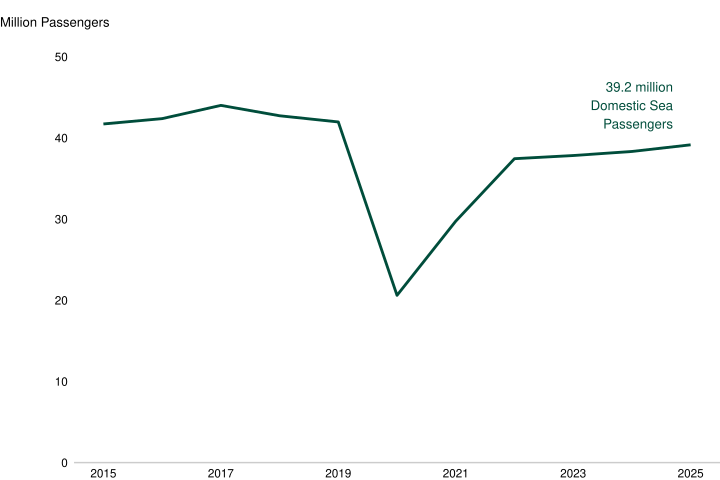
The total number of sea passengers on domestic routesÌýcomprisesÌýpassengers on domestic sea crossings, domestic cruises, inter-island domesticÌýroutesÌýand river ferries.Ìý
ForÌýdomestic passengersÌýin 2025:Ìý
-
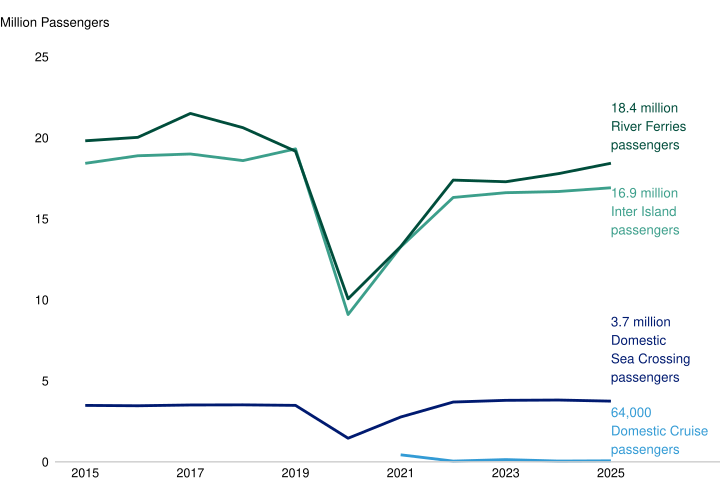
river ferries accounted for 18.4 million (47% of all domestic sea passengers), up 4% compared with 2024, but 4% lower than in 2019Ìý
-
inter-island services accounted for 16.9 million (43%Ìýof all domestic passengers), up 1% compared with 2024, but 12% lower than in 2019Ìý
-
domestic sea crossings accounted for 3.7 million passengers (10% of all domestic passengers), down 2% from 2024 and 8% higher than in 2019
-
domestic cruises accounted for 64,000 (less than 1%Ìýof all domestic passengers)
Chart 2: UK domestic sea passengers by type of route, 2015ÌýtoÌý2025(SPAS0201)
Passengers on river ferriesÌý
InÌý2025,Ìýthere wereÌý18.4Ìýmillion passengers on river ferries,Ìýan increase of 4% compared with 2024Ìýat 17.8 million passengers.ÌýThis increase is drivenÌýlargely byÌýa 6% increase inÌýpassenger numbers onÌýLondon services.ÌýÌýThis can be attributed to higher demand following the introduction of tolls at the Silvertown and Blackwall tunnels, alongside the introduction of a new operating model in May 2024 that expanded the service to a seven-day, two-vessel operation.Ìý
Data for one river ferry operator hasÌýbeenÌýimputedÌýsinceÌý2023, therefore no comparisonsÌýto pre 2023Ìýhave been made.ÌýTheÌýmethodologyÌýfor the imputation can be found inÌýnotes and definitionsÌýpage.Ìý
Passengers on inter-island domestic routesÌý
The number of passengers on inter-island journeys was stable from 2010 toÌý2019 but saw a large decrease from 19.3 million passengers in 2019 to 9.1 million in 2020.ÌýPassenger numbers recovered sharply untilÌý2022, butÌýhaveÌýremainedÌýsteady since at a level below 2019.ÌýInÌý2025,Ìýthere were 16.9Ìýmillion passengers,Ìýwhich is a 1% increase compared with 2024ÌýandÌý12% below 2019 numbers.Ìý
There were 7.4Ìýmillion passengers between Hampshire and the Isle of Wight inÌý2025,ÌýremainingÌýstable with 2024 levels.ÌýPassengers on other inter-island routesÌýcombinedÌýsaw anÌýincrease ofÌý21% from 2024,Ìýlargely drivenÌýby the Cowes-East Cowes route.ÌýÌýThisÌýmay reflect the return to normal service levels following planned maintenance works to the Cowes Floating BridgeÌýinÌý2024.Ìý
InÌý2025, passengers on Scottish inter-island routesÌýdecreased 1% compared toÌý2024Ìýpassenger numbers.ÌýSee theÌýÌýfor further information, including figures for individual routes.
Passengers onÌýdomestic sea crossingsÌý
The number of passengers undertaking domestic sea crossings wasÌýrelatively stableÌýfrom 2010 to 2019. This droppedÌýsubstantially fromÌý3.5 million passengers in 2019 to 1.5 million in 2020 due to travel restrictions during the coronavirus pandemic. By 2022, passenger numbers on domestic sea crossings had recovered and, despite a 2% decrease compared with 2024, were 8% above 2019 levels in 2025, with 3.7 million passengers (chart 2).Ìý
Of all passengers on domestic sea crossings, 78% of passengers travelled on major domestic routes, with the remaining 22% of passengers travelling on minor domestic routes. These proportions are broadly consistent with previous years.Ìý
Passengers on major domestic routes (short sea)
Map 1: Top 5 UK major domestic short sea routes inÌý2025Ìýby number of passengers (millions) and change from 2024Ìý(SPAS0201)
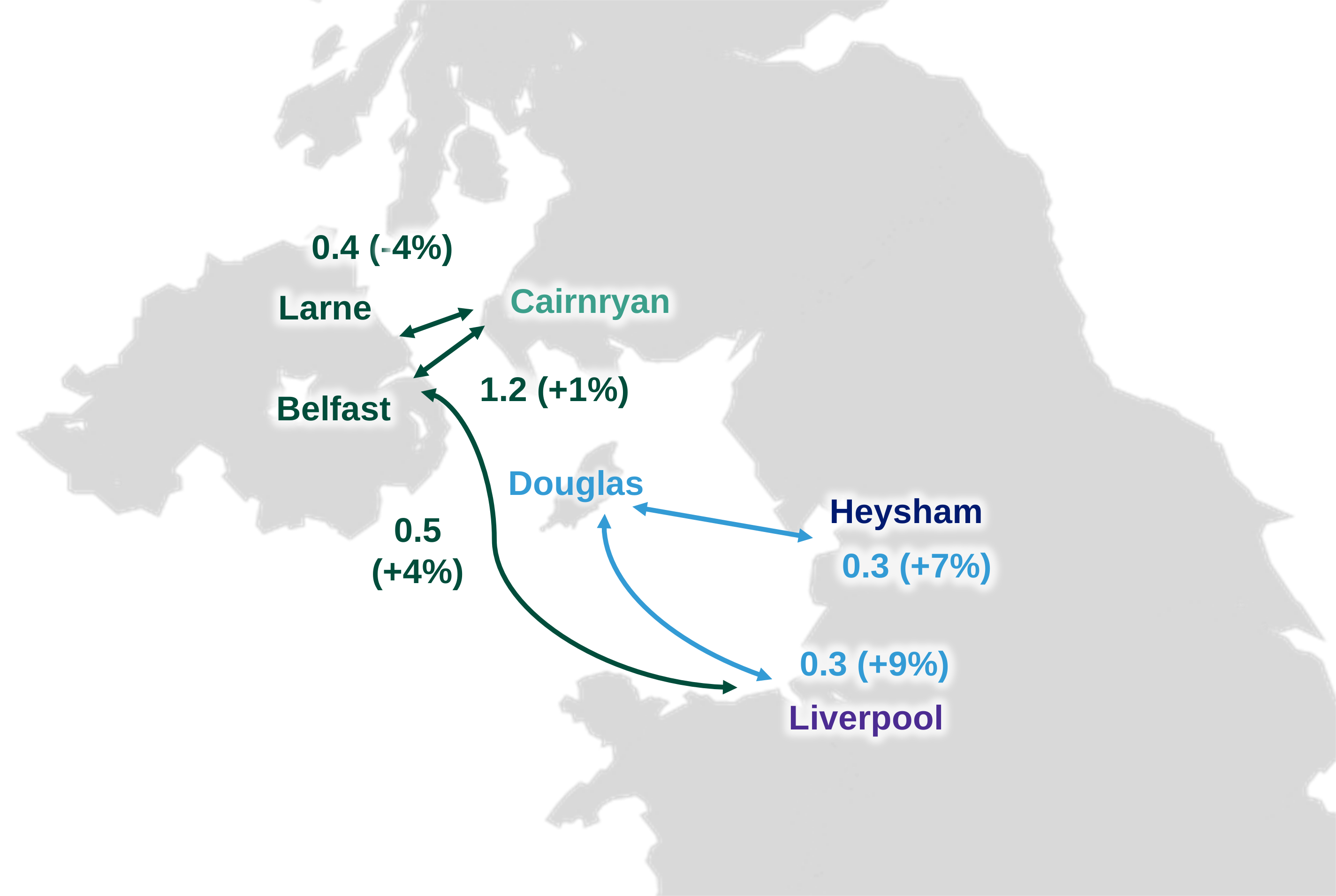
InÌý2025,Ìýpassenger numbersÌýon domestic short sea routesÌýwereÌý2% lower than in 2024 but remainedÌý8% above 2019 levels.ÌýÌý
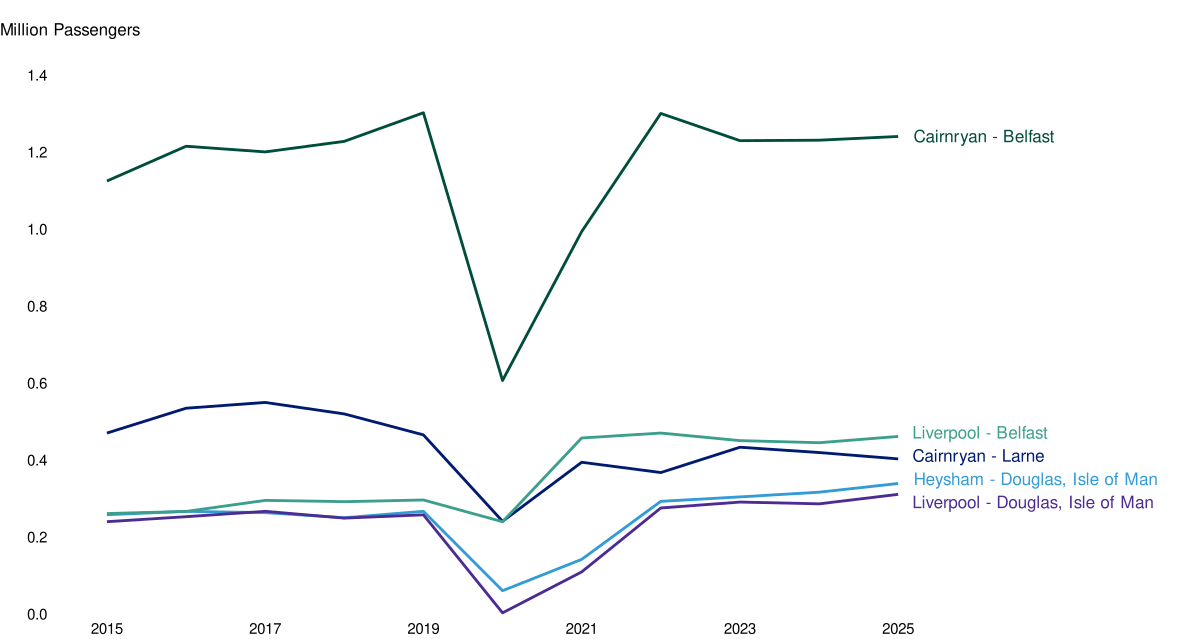
Domestic sea crossings from Great Britain to Northern IrelandÌýwereÌý2% above 2019 levels.ÌýCairnryan-Belfast is consistently the busiest domestic short sea route. InÌý2025, this route saw 1.2Ìýmillion passengers, a 1%Ìýincrease compared with 2024.ÌýLiverpool-BelfastÌýis the next busiest domestic short sea route, withÌý0.5 million passengers,Ìýclosely followed by Larne-CairnryanÌýwith 0.4 million passengers.Ìý
BothÌýroutesÌýfromÌýGreat Britain toÌýtheÌýIsle of Man areÌýin the top 5 UKÌýdomestic short sea routes withÌý0.3 millionÌýpassengersÌýeachÌýinÌý2025. Heysham – Douglas had aÌý7%Ìýincrease from 2024Ìýand Liverpool – Douglas had aÌý9%ÌýincreaseÌýfrom 2024Ìý(map 1, chart 3).Ìý
Chart 3: Top 5 busiest major domestic sea crossing routes,Ìý2010 toÌý2025ÌýÌý(SPAS0201)
Passengers onÌýdomestic cruisesÌý
In May 2021, UK domestic cruises were allowed toÌýoperateÌýas part of the gradual lifting of coronavirus restrictions and in 2021 there were 433,000 domestic cruise passengers. This decreased by 90% to 46,000 in 2022 following the reopening ofÌýinternational cruises. In 2025, domestic cruises carried around 64,000 passengers,Ìýup 32% from 48,000 in 2024.
Detailed statistics on domestic sea passengers can be found inÌýdataÌýtableÌýSPAS0201.
Annex: timeline of coronavirus events affecting sea travelÌý
A timeline of events during the coronavirus pandemic that affected sea travel since March 2020 until March 2022 can be found in theÌýNotes and definitionsÌýsection.Ìý
Background informationÌý
We would welcome any feedback on these statistics byÌýsea-passenger.stats@dft.gov.uk. We willÌýattemptÌýto address any comments in aÌýsubsequentÌýrelease.Ìý
TheÌýdata tablesÌýfor sea passenger statistics are available.Ìý
Full guidanceÌýonÌýthe methods used in the publication of theseÌýreleases, andÌýthe quality of the data, and known users and uses of the statistics are available.Ìý
The sea passenger statistics areÌý. The statistics presented in this release were independently reviewed by the Office for Statistics Regulation in February 2013 and are therefore labelled ‘accredited officialÌýstatistics’.Ìý
Details of ministers and officials who receiveÌýpre-release accessÌýto these statistics up to 24 hours before release are available.Ìý
Instructions for printing and savingÌý
Depending on which browser you use and the type of device you use (such as a mobile or laptop)ÌýtheseÌýinstructions may vary.Ìý
You will find your print and save options in yourÌýbrowser’sÌýmenu. You may also have other options available on your device. Tablets and mobile device instructions will be specific to the make and model of the device.Ìý
How to searchÌý
Select Ctrl and F on a Windows laptop or Command and F on a Mac
This will open a search box in the top right-hand corner of the page. Type the word you are looking for in the search bar and press enter.Ìý
Your browser will highlight the word, usually in yellow, wherever it appears on the page. PressÌýenterÌýto move to the next place it appears.Ìý
Contact usÌý
To hear more aboutÌýDfTÌýstatistical publications as they are released, follow us on X atÌý.